

Espresso Briefing: Peterborough Is Growing. The Basics Still Have To Work. |
Peterborough has always been a city people underestimate.
Then they look properly and realise it is doing several big things at once.
Growing fast.
That is a lot.
And this is where the polite version of the story usually gets silly.
Because “growth” sounds good in a strategy document.
In real life, growth means:
“Peterborough keeps being told it has potential,” said Jasmin from Orton.
“At some point potential needs to turn up with a bus route, a GP appointment and a job that pays properly.
That is the issue this week.
Peterborough is not just growing. It is being tested. |
 |
Quick Vote: What Is Peterborough Being Asked To Absorb Too Fast |
Pick the one you notice most.
Click below to have your say. |
Is Peterborough Being Asked To Take Too Much On? |
You know how it goes.
Need more houses? Peterborough can take some.
Peterborough
Peterborough again.
And at some point you do start thinking:
Hang on.
Are we growing properly, or are we just being told to get on with it?
Because “Peterborough has room to grow” sounds fine in a meeting.
It feels different when you’re trying to get a GP appointment, find a school place, sit in the same traffic again, pay the rent, get a teenager into work, or work out why the city centre still doesn’t feel like the heart of a growing city.
“I’m fed up with Peterborough being treated like the spare room of Cambridgeshire,” said Nadeem from Millfield.
“Everyone wants to put more in here, but nobody wants to pay for the bigger wardrobe.”
That’s the bit people feel.
Not “growth is bad.”
More homes can be good.
But only if the city gets the roads, schools, doctors, jobs, youth support, drainage, public transport and proper attention to go with it.
Otherwise it’s not growth.
It’s just more being piled onto the same table while everyone pretends the legs are fine.
So tell us honestly:
Where does Peterborough feel like it’s being asked to take too much on?
Where is the pressure showing most? |
 |
Immigration In Peterborough: Can We Talk About It Properly? |
This is one of those topics where people either shout, dodge it, or say something so careful it means nothing.
But Peterborough people do talk about it. In taxis.
Peterborough has changed a lot.
You can see it in the food, shops, languages, schools, churches, mosques, workplaces, streets and neighbourhoods.
In many ways, that is part of the city’s character now.
But it is also fair to ask whether the city has had enough support to handle fast change properly.
Because two things can be true at once. Immigration can bring workers, businesses, culture, families, food, energy and people who build a life here.
And rapid change can still put pressure on housing, schools, GP access, translation support, neighbourhood trust, low-paid work, landlords, charities and community services.
That is not hate.
That is real life. “I don’t blame people for coming here to work,” said Paul from Bretton.
“I blame the people who act like the city can just absorb everything without extra help.”
Magda from Dogsthorpe put it another way:
“Some people blame immigrants for every problem. But some problems were here before my family arrived.”
That feels closer to where a lot of people are.
They are not asking for slogans.
They are asking:
So let’s ask it like normal people:
Has Peterborough been given enough support to handle fast population change properly?
What would help Peterborough handle growth and immigration better without turning it into a shouting match? |
 |
Can Peterborough’s Services Keep Up With The City It Has Become? |
This is where the growth argument gets real.
Not in a strategy meeting.
In the school office.
Peterborough’s population passed 200,000 at the 2021 Census. It rose from about 183,600 in 2011 to around 215,700 in 2021 a rise of 17.4%
. By mid-2023, the council’s own population page put the local authority population estimate at 219,510.
That is a lot more people needing everyday basics.
More school places.
And the money side is not exactly relaxing either.
Peterborough City Council’s 2026/27 budget papers talk about extra investment in children’s social care because of an increase in looked-after children, support for the Children’s Services improvement programme, and more educational psychologists to strengthen support for children with SEND.
That tells you where the pressure is landing.
Children.
Then look at health.
A recent Peterborough health and wellbeing update said men can expect to live 55.6 years in good health in Peterborough, compared with 62.6 years in Cambridgeshire.
For women, Peterborough was around 55.7 years, compared with 62.4 years in
Cambridgeshire.
That is not a small gap.
That is people spending more of life ill, stressed, limited, waiting, coping, or needing help earlier.
“Every service says demand is high now,” said Elaine from Werrington.
“At some point demand being high isn’t an excuse. It’s the whole problem.”
So when people say Peterborough can keep growing, the fair question is:
With what support?
Because if the city grows but services do not grow properly with it, people feel it everywhere:
So tell us:
Which Peterborough service feels most stretched right now?
|
 |
Who Actually Gets A Say When Peterborough Is Being Reorganised? |
We’ve already had the election-delay row.
That one has been done.
The bigger question now is simpler:
When Peterborough is being reorganised, who actually gets heard?
Because most people are not sitting at home reading local government papers for fun.
They are asking normal questions.
Will my council tax change?
That is what people care about.
Not the diagram. Not the structure. Not whether someone in a meeting says “unitary footprint” with a straight face.
“I don’t need a lecture on reorganisation,” said Anita from Hampton.
“I want to know who I shout at when the thing I actually need doesn’t happen.”
That’s the bit politicians often forget.
If the system changes, residents need to know:
So let’s ask this properly:
What should Peterborough protect before any reorganisation deal is done?
|
 |
Is Peterborough Getting A Fair Deal — Or Just The Bill? |
This is one of those things people say quietly, then louder after a bad week.
Does Peterborough actually get a fair deal?
Because it can feel like the city is useful when someone needs growth, land, workers, housing numbers, warehouses, roads, cheaper rents, or somewhere to send pressure that other places do not want.
But when the money, attention, transport upgrades, shiny jobs, culture projects and “future of the region” chat starts flying around,
Peterborough often feels like it is standing at the back with its hand up.
Cambridge gets talked about like the engine room.
Peterborough gets talked about like the place that should be grateful to be in the building.
And people notice. Loo from Millfield told us
“I’m tired of Peterborough being treated like the budget version of everywhere else,”
Kelly from Dogsthorpe. “We’re big enough to take the pressure, apparently, but not important enough to get the attention.”
That is the row underneath a lot of local frustration.
If Peterborough is expected to grow, house people, create jobs, support new communities, handle public service pressure and keep absorbing change, then it needs more than warm words.
It needs:
Because nobody wants Peterborough to be patted on the head and told it has “potential” again.
Potential does not fix Bourges Boulevard.
So let’s ask it plainly:
Is Peterborough getting a fair deal compared with the rest of Cambridgeshire?
Where does Peterborough feel short-changed — and what would a fair deal actually look like? |
 |
Peterborough’s Money Problem: Where Would You Spend First? |
Council budgets sound boring until you realise they decide the stuff people actually notice.
Roads.
Then suddenly “the budget” is not boring at all.
It is the reason people ask:
Why is that road still a mess?
Peterborough City Council’s 2026/27 budget was signed off in February.
The council said it included extra investment in children’s social care because of an increase in looked-after children, support for the Children’s Services improvement programme, and more educational psychologists for children with SEND.
That tells you where some of the pressure is landing. Children.
The council tax rise for 2026/27 is 4.99% — which the council says appears as 5% on bills because of rounding.
And its own council tax breakdown shows how much of a typical weekly council tax amount goes where: £26.10 to schools and education including SEND, £20.70 to adults and older people, £15.30 to children’s social care, £3.70 to waste disposal and street cleansing, £2.40 to public health, £1.40 to highways maintenance, 60p to recreation, culture, leisure and libraries, and 40p to parks and open spaces.
That last bit is the kind of thing people notice.
Because everyone wants parks, libraries, roads, leisure, culture, cleaner streets and nicer public spaces.
But the big money goes where the need is hardest to ignore.
Care.
And then there is debt.
The council said its debt stood at £486 million at the end of March 2026, down from £527 million a year earlier.
That is a reduction, yes. But it is still the kind of number that makes normal people put the kettle on before reading the rest.
“I want the city centre fixed too,” said Martin from Paston. “But if the choice is between nicer paving and vulnerable kids, I know where I’d start.”
That is the uncomfortable truth.
Most people want everything improved.
But when the money is tight, the question becomes brutal:
What comes first?
So let’s ask it plainly.
If Peterborough could only put serious money into three things first, what would you choose?
What should Peterborough protect first when money is tight? |
 |
Youth Jobs: What Happens If Too Many Teenagers Get Stuck? |
This is one of those problems that sounds like a statistic until it is your son, daughter, grandson, niece, nephew, neighbour or mate’s kid sitting at home with no clear next step.
Peterborough has a real issue here. The Combined Authority says 5.4% of Peterborough’s 16–17-year-olds are not in education, employment or training.
Across Cambridgeshire and Peterborough as a whole, the figure is 3.9%.
That gap matters.
Because 16 or 17 is early.
Too early to be drifting.
Too early to already feel like work, training, college or an apprenticeship is “not for me.”
And nationally, this is not a small problem either. ONS figures for January to March 2026 estimated around 1.013 million young people aged 16–24 were not in education, employment or training.
Of those, around 400,000 were unemployed and around 613,000 were economically inactive.
That last bit is the worrying part.
Not just out of work.
Not even looking.
So when Peterborough talks about growth, jobs and opportunity, we need to ask a blunt question:
Are young people actually getting a first step, or just being told to be ambitious?
Because ambition is not much use if nobody shows you the ladder.
“My lad doesn’t need another leaflet,” said Shazia from Ravensthorpe.
“He needs someone to help him get from ‘I don’t know’ to an actual first step.”
That first step might be:
And this is not just a “young people” issue.
If Peterborough leaves too many young people stuck, everyone pays later.
Families.
So here is the proper question:
What would actually help Peterborough teenagers get moving?
|
 |
Mini Poll: What Should Young People Be Taught Before Leaving School? |
Pick the one Peterborough teenagers need most.
|
 |
Is Peterborough Becoming A City Young People Leave? |
This is the real danger.
Peterborough can talk about growth all it likes, but if ambitious young people feel they have to leave to build a decent life, the city loses twice.
It loses their spending now.
Then it loses their skills later.
The question is not whether every young person should stay.
Of course some will move for university, work, travel, relationships, or because they fancy a change.
The question is whether Peterborough gives them a reason to come back.
Good jobs.
“Peterborough tells young people to aim high,” said Lee from Walton. “Then half the time they have to leave to find the ladder.”
So tell us:
What would make young people stay, come back, or build something here? |
 |
Housing Pipeline: Solving The Crisis Or Creating New Problems? |
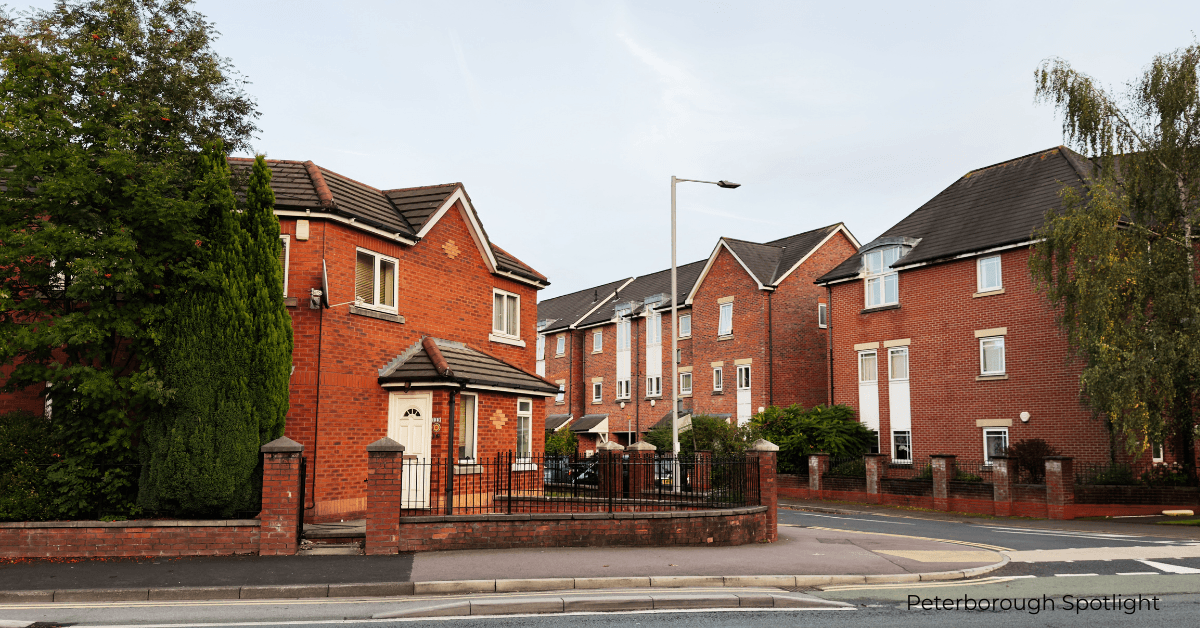
Peterborough needs homes.
That is not really the argument.
The argument is what kind, where, at what price, with what infrastructure, and who benefits.
A home-building pipeline can help.
But only if it does not create estates where people move in before the GP, school, shop, road, bus, drainage, green space and community bits have properly arrived.
A house without the basics nearby is not just a home.
It is a daily logistics puzzle with a mortgage attached.
Current local property numbers show the basic affordability tension.
Peterborough’s average house price was around £240,000 in March 2026, with first-time buyer prices around £211,000 and private rents around £978 a month.
That is cheaper than Cambridge, but not cheap when wages, bills, childcare, transport and deposits are sitting on the same kitchen table.
A £211,000 mortgage at 5.25% over 25 years is roughly £1,264 a month.
A £240,000 mortgage at 5.25% over 25 years is roughly £1,438 a month.
That is not advice. It is just the kind of maths that makes people stare at Rightmove and then at their bank account.
“I used to think Peterborough was affordable,” said Nadine from Woodston. “Then I added rent, food, childcare, petrol and council tax and stopped using that word so casually.”
So the proper housing question is:
Are new homes solving the problem, or just moving the pressure around? |
If The Showground Homes Plan Is Fading, What Should The Land Become Instead? |
The East of England Showground is one of those Peterborough places where everyone seems to have a memory, an opinion, or both.
Shows.
The original housing-led idea was huge: up to 1,500 homes, plus things like a primary school, care village, hotel, leisure and community uses.
But those plans have already been in serious trouble, with council officers previously preparing to refuse the major applications.
And more recently, the conversation has sounded less like “here come 1,500 homes” and more like “what should the Showground actually be used for?”
Which might not be a bad thing.
Because if the housing plan is slowing, fading, or being quietly reworked,
Peterborough has a rare chance to ask a better question.
Not just:
How many homes can we fit on it?
But:
What would actually make that land useful to the city again?
Because leaving it drifting is no good either. Peterborough does need homes.
But it also needs places that bring people in, create jobs, give families something to do, support local businesses, host events, and make the city feel like it has ambition beyond another estate and a few hopeful drawings.
“I don’t want it left doing nothing,” said Colin from Alwalton.
“But I don’t want Peterborough to lose a major site and end up with something nobody feels proud of.”
That is the real issue.
If the Showground gets another chance, what should it be?
And here’s the uncomfortable bit:
Peterborough has had enough “it’ll be exciting when it’s done” promises.
People will want to see:
So let’s ask the right question.
If the Showground housing plan is being shelved, paused or reworked, what should happen there instead?
|
 |
Green Space For Housing: Which Peterborough Places Would You Fight For? |
Everyone says Peterborough needs homes.
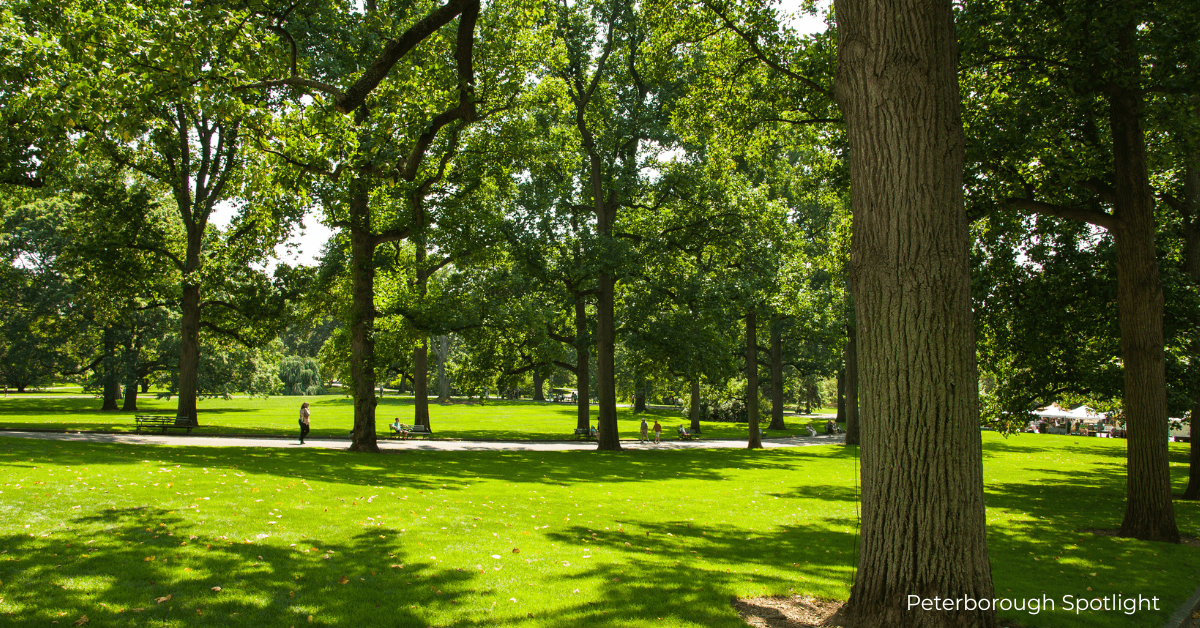
Then someone points at a field, a village edge, a green wedge, a dog walk, a bit of open land, or the space that stops one place feeling swallowed by another, and suddenly the argument gets real.
Because people are not just arguing about “green space.”
They are arguing about the place where they walk the dog.
And Peterborough is not short of examples.
Eye Green Wedge
Eye is exactly the kind of place where “just a bit more housing” can feel very different if you live there and use the lanes, fields and village edges every week.
Wittering / Land West Of Wittering
That matters because once you start talking about new settlements or urban extensions, people immediately ask about roads, drainage, schools, GP access and whether village life changes beyond recognition.
East Of England Showground / Alwalton Side Of The City
People are not just asking “homes or no homes?” They are asking whether a major Peterborough site becomes something useful, something forgettable, or something residents feel was taken out of their hands.
Hampton And The South Of The City
Stanground, Farcet And The Low-Lying Edges
Werrington, Paston And The Northern Edges
“I’m not against houses,” said Meena from Eye. “I’m against being told a field nobody in an office cares about is suddenly ‘suitable’ when locals know it floods, queues or keeps the village separate.”
Gareth from Stanground put it more bluntly: “If the water already has nowhere to go, don’t act surprised when people ask about drainage before they clap for new homes.”
That is the line.
Peterborough does need homes.
But the question should not be:
How much green space can we get away with losing?
It should be:
Which places matter enough that development should have to prove itself before touching them? Before any field, green wedge, village edge or open space is built on, people should be asking:
So tell us: Which Peterborough green space, field, village edge, route, park, gap or open area would you fight for — and why? Not “all development is bad.” Not “build everywhere.” The real answer is usually messier than that.
Name the place, what people use it for, and what must be protected before anyone talks about building there. |
 |
Drainage And Flooding: Where Does The Water Actually Go? |
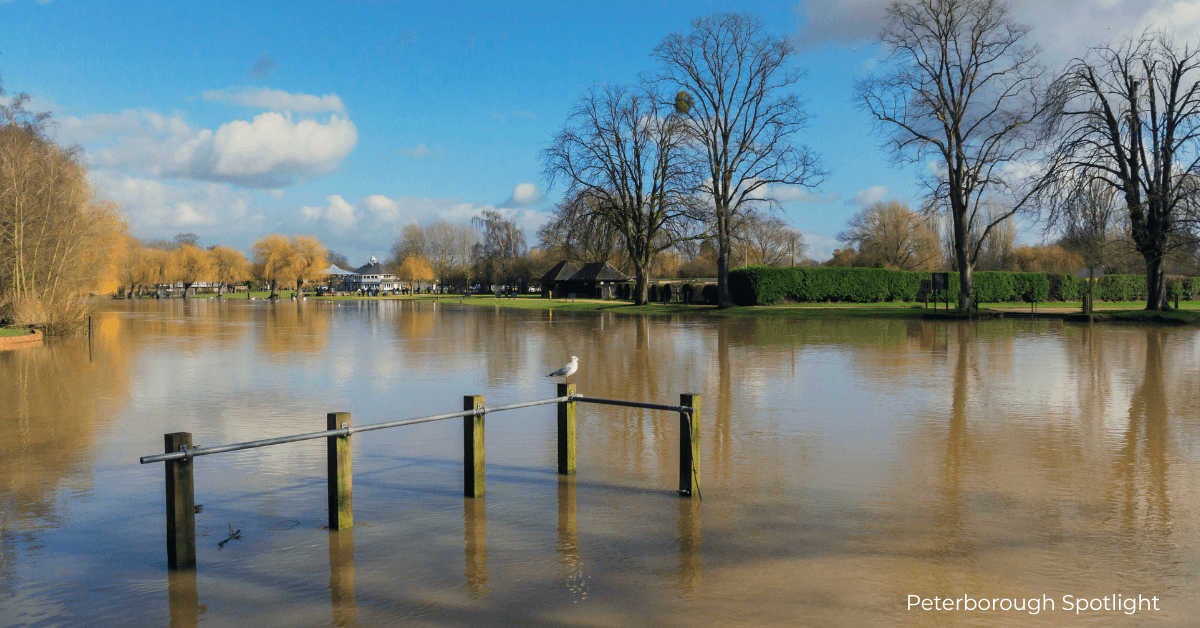
Drainage is one of those things people ignore until the road is underwater.
Then suddenly everyone becomes very interested in ditches, gullies, balancing ponds, culverts, run-off, soakaways, pumping stations, surface water and who was meant to maintain the thing nobody noticed last summer.
Peterborough has to take this seriously.
The council says the city is at risk from surface water flooding, which can happen almost anywhere after heavy rain because water runs to lower areas and ponds there.
It can come from heavy rainfall, smaller watercourses, sewers or groundwater not just rivers bursting their banks.
That matters when people talk about building more homes.
Because if you are adding houses, roads, driveways, roofs, car parks and hard surfaces, the obvious question is:
Where does the water go?
Not in a brochure.
In real rain.
The River Nene matters too.
Flood-warning areas around Peterborough include places near the river such as Sutton, Water Newton, Thorpe Meadows and Woodston.
Low-lying places near the river are not an abstract map issue if you live, drive, walk or own property nearby.
And then there are the local places where residents already talk about water, roads and drainage after bad weather:
Stanground And Fletton
Farcet, Yaxley And The Southern Edge
Hampton And The Newer Growth Areas
Eye, Thorney And The Fen Edge
Woodston / River Nene Side
“People laugh when you ask about drainage,” said Gareth from Stanground. “Then it rains hard and suddenly everyone wants to know who cleared the ditch.”
And Meena from Eye put it more simply: “If a field already holds water, don’t call it empty land like it isn’t doing a job.”
That is the line.
Some green space is not just “space.” Sometimes it is soaking up water.
So before any major development, residents should be asking:
Peterborough does need homes.
But “we’ll sort the drainage later” should not be good enough.
So tell us:
Which local road, field, estate, village edge or planning site has drainage questions people should not ignore.
Name the place, what happens when it rains, and what should be checked before more building is approved. |
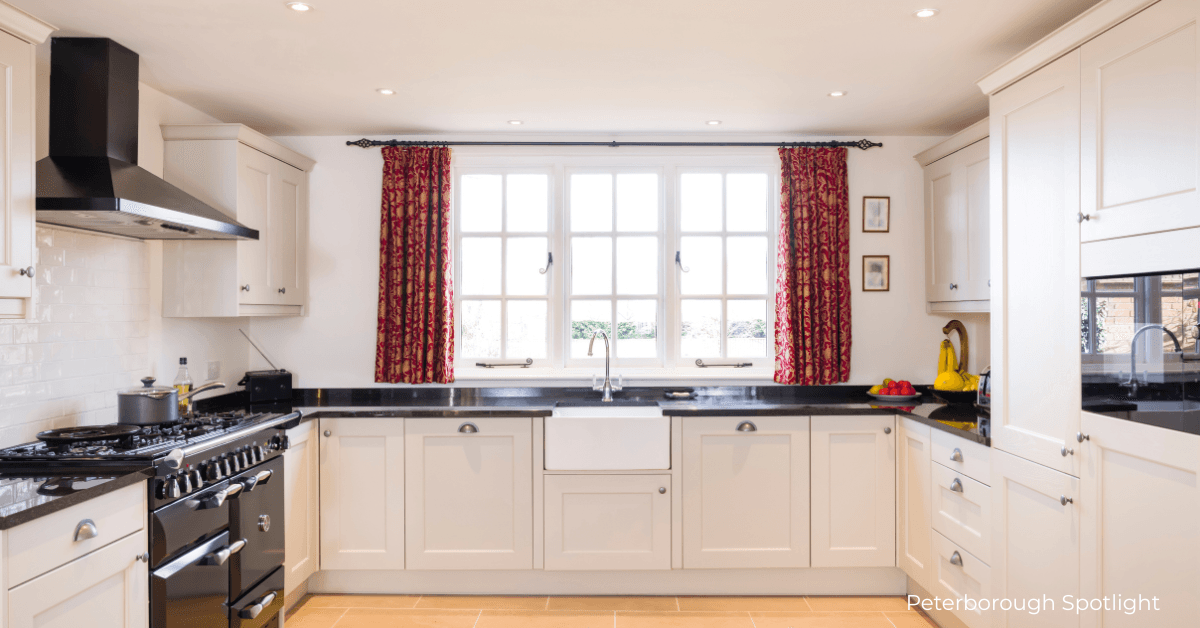 |
The Nice Kitchen Trap: What Else Are Buyers Ignoring? |
A nice kitchen can hypnotise people.
Suddenly damp becomes “probably nothing.”
This is where a good surveyor earns the money . Things buyers should ask before falling in love:
“I don’t care how nice the tiles said Sophie from Hampton. “If the road isn’t adopted and nobody can explain the charges, I’m out.”
What did you nearly miss when buying, renting or viewing?
Ask A Property Question |
 |
The Boring Legal Question: What Are You Paying For After You Move In? |
Here is one of the things that catches people out on newer developments.
You buy a house.
Not a flat.
So you assume that once the mortgage, council tax, utilities and insurance are sorted, that is mostly it.
Then someone mentions an estate charge.
Or a maintenance charge.
And suddenly the question becomes:
Hang on what exactly am I paying for, who controls it, and can it go up?
This is not a small detail.
On some newer estates, even freehold house owners can have ongoing charges for shared estate areas.
The charge might look manageable at first. But buyers need to know whether it is fixed, reviewed, capped, transparent, challengeable, or likely to rise when the developer steps back and the management company takes over.
That is the bit people often do not understand until too late.
Kelly from Hampton put it bluntly: “I knew about the mortgage and council tax. I didn’t realise I also needed to ask who was charging us for the bits outside the front door.”
So before buying on a newer development, ask the boring questions early:
And do not just ask the sales office.
Ask your conveyancer to explain it in normal language before you exchange.
Because “nice new estate” can sound simple.
But if the road, green space, drainage, play area and landscaping come with a bill attached, you need to know what that bill looks like before you are living there and muttering at an invoice.
So tell us:
Have you been surprised by an estate charge, management fee or maintenance bill on a newer development?
What did you wish someone had explained before you bought? |
 |
City Centre: Is Peterborough Being Left Behind While Growth Goes Elsewhere? |
Peterborough can build houses on the edges.
It can talk about new communities, business parks, regeneration and long-term plans.
But the city centre still has to feel like somewhere worth using.
That means more than a few improvement projects and hopeful language.
A working city centre needs:
“People keep saying the city centre needs footfall,” said Becky from Fletton. “Fine. Give me a reason to stay after I’ve done the one thing I came in for.”
So what would make you spend an extra hour in town?
|
One Peterborough Food Stop: Where Would You Send Someone This Week? |
Not “there are loads of places.”
One place.
Someone is hungry, impatient, and asking where to go. Where are you sending them?
A few examples to start the argument:
The Chalkboard
Gurkha Lounge, Hampton
XOXO Grill House
. The Cuckoo, Alwalton
Kafé Bloc / city café-style stops
Millfield / Lincoln Road Food Energy
“I don’t want ‘try town’,” said Priya from Eastfield. “I want the place, what to order, where to park and whether my mum will find it too loud.”
Send us:
|
 |
Click the image above to sign up for our latest Taste Trail |
Mini Food Poll: What Peterborough List Should We Build First? |
Pick one.
|
 |
Cost Of Living: Is This Still The Issue Voters Actually Care About? |
Politicians can talk about reorganisation, growth, planning, migration, transport and strategy. Most households still notice the weekly shop.
Rent.
“It’s not one big bill,” said Donna from Bretton. “It’s everything being £3 more than you expected until the month feels personally painful .”
So let’s build the Peterborough cost list.
What is still biting hardest?
And what local thing still feels good value? |
 |
Under-£25 Peterborough: Can A “Cheap Day Out” Stay Cheap? |
Peterborough does have low-cost days out.
But you still have to watch the extras.
Because “we’ll just go out for a bit” can become:
Parking.
Ferry Meadows is the obvious example.
It is one of Peterborough’s best local assets and it can be a brilliant low-cost outing.
But even there, parking adds up if you stay longer than planned. Current Ferry Meadows parking charges are £2.60 up to 1 hour, £3.60 up to 2 hours, £5.20 up to 3 hours, £6.40 up to 4 hours, £7.40 up to 8 hours, and £7.80 over 8 hours.
Charges apply all day, every day, with ANPR monitoring.
So a “free walk” can easily become:
Jade from Orton had the short version: “Ferry Meadows is free until my children notice the café exists.”
Peterborough Museum is another good option because general admission is free, and it opens Tuesday to Saturday, 10am to 4pm, with last entry at 3.30pm.
But it has no on-site parking, so the real cost depends on how you get there, where you park, whether you add food, and whether the visit becomes part of a city-centre spend.
Peterborough Cathedral is usually open Monday to Saturday and Sunday lunchtime/afternoon, with visitor entry by donation, although special exhibitions or events can change access or pricing.
That makes it one of the city’s strongest low-cost visitor stops, as long as you check what is on before promising a “quick free look round.”
The theatres are more mixed. They are not usually “cheap day out” territory, but some family or smaller shows can sit close to the lower-cost bracket if you plan early.
New Theatre listed Tom Gates’ Epic Stage Show from £20.50, and Key Theatre listed family/music/comedy examples from around £20–£28 in June listings.
So let’s build a Peterborough list that is honest.
Not “free things to do.”
Low-cost things that stay low-cost if you plan them well.
Starter categories:
Best Almost-Free Hour
Best Under-£10 Treat
Best Under-£25 Adult + Child Idea
Ferry Meadows with packed lunch and controlled parking time. A low-cost show if you catch the right one.
Best “Take Visitors Without Apologising” Stop
Best Place Where The Extras Catch You Out
So send us your real Peterborough under-£25 idea:
Because a cheap day out is only cheap if someone tells you where the money leaks out. [Send An Under-£25 Tip]
What Peterborough outing still feels good value and what extra cost catches people out? |
 |
The Garage Quote Decoder: What Does That Actually Mean? |
There is a special moment in adult life when someone at a garage says a sentence and you nod like you understood it.
You did not.
You just heard:
“Pads are low.”
And somehow you are meant to know whether this is:
Alan from Werrington had the short version: “I don’t mind paying for the car. I mind pretending I know what a ‘near-side advisory’ means while my bank account starts sweating.”
So let’s build the Peterborough Garage Quote Decoder
Not a list of garages this time.
A list of questions you should ask before saying yes to work you don’t understand.
Try these:
Is This Urgent, Or Can It Wait?
Will This Fail The MOT?
Can You Show Me The Part Or Problem?
Is This A Safety Issue?
What Happens If I Leave It A Month?
Is There A Cheaper Option That Is Still Safe?
Can You Put The Quote In Writing?
What Would You Do If It Was Your Car?
This is where a good local garage, MOT centre, tyre place or mobile mechanic can make themselves memorable.
Not by being the cheapest.
By explaining the difference between “this can wait” and “do not ignore this unless you enjoy recovery trucks.”
So tell us:
What garage phrase, MOT advisory or car warning did you wish someone had translated into normal English?
What did the garage say and what did you wish you had asked before paying? |
Quick Car Question: What Warning Light Would You Never Ignore Again? |
Since we’ve already decoded garage quotes, let’s keep this short.
One question.
What car warning did you ignore once and then regret?
Peterborough drivers know how quickly a small car problem becomes a big-life problem.
School run.
Tell us the warning you would never ignore again.
What did you ignore, what did it cost, and what would you tell someone else to check sooner? |
 |
Click The Image Above To Register For The Smarter Paws Dog Training Hub (FREE For Peterborough Spotlight Readers) |
The Ferry Meadows Dog Test: Is Your Dog Ready For A Busy Day Out? |
Ferry Meadows is brilliant for dogs.
That is also the problem.
Because on a busy day you get everything at once.
Children.
So the question is not just:
“Is this place dog-friendly?”
It is:
“Can my dog cope with it when it’s busy?” Because a calm Tuesday walk is not the same as a sunny weekend near the café, lake paths or picnic areas.
Leanne in Hampton had the short version: “My dog is friendly. Unfortunately, he is friendly like a drunk uncle at a wedding.”
That is the bit owners recognise.
A dog can be lovely and still not ready for:
This is where training is not about having a “perfect” dog.
It is about making normal days easier.
Raimonda’s Smarter Paws Hub is a good starting point for owners who want calmer everyday behaviour before taking dogs into busy public places.
Now we want the Peterborough dog list: Where is good for dogs and what should owners know before turning up?
Where works for dogs in Peterborough — and what should owners check before they go? |
 |
Sign Up For All The Latest Local Pet News , Advice an Updates At Peterborough Local Pet Insider |
It’s Not Just Dogs: What Happens If Your Pet Is A Cat, Rabbit, Parrot Or Snake When Renting Property? |
Pet renting conversations nearly always turn into dog conversations.
Dogs barking. Fine.
But Peterborough has plenty of renters with pets that are not dogs.
Cats.
And for some renters, the question is not:
“Can I keep the dog?”
It is:
“Why is my indoor cat being treated like it’s planning to destroy the building?”
Or:
“Why is a rabbit in a hutch being treated the same as a large dog in a flat?”
Rina in Eastfield had the short version: “My cat sleeps 19 hours a day and judges people from a windowsill. She is not exactly running an organised crime group.”
That is where the conversation needs to get more sensible.
Landlords have fair concerns. Damage matters.
But renters also need a fair way to explain the actual pet, not just be refused because the word
“pet” appears
So if you rent with a non-dog pet, the better questions might be:
Suzanne at Y-US Lettings is the kind of local lettings voice who can help renters and landlords have this conversation without turning it into a fight before anyone has explained the details.
And this is where we want Peterborough pet owners to help.
What pet do you rent with or what pet would you worry about as a landlord?
Tell us what landlords often misunderstand and what renters should explain better.
What non-dog pet should landlords be more realistic about? |
 |
Why Are People In Peterborough Spending More Years In Poor Health? |
This is the serious one.
And the numbers are grim.
Men in Peterborough can expect about 55.6 years in good health.
The England average is 61.5.
In Cambridgeshire, it is 62.6.
For women, Peterborough is about 55.2 healthy years.
The England average is 61.9.
In Cambridgeshire, it is 62.4.
So Peterborough is not just a bit behind its better-off neighbour.
It is roughly six years below the England average, and around seven years below Cambridgeshire.
The local health papers also put Peterborough among the lowest areas in the country for healthy life expectancy: 13th lowest for men and 12th lowest for women.
That is not a tiny gap.
That is years of life where people are more likely to be dealing with pain, illness, stress, medication, appointments, limits, caring needs, or simply not being able to do the things other people take for granted.
Six or seven healthy years is not “a statistic.” It is the difference between working comfortably and struggling before retirement.
Marcin from Millfield had the blunt version:
“My dad didn’t need another leaflet about healthy choices. He needed less stress, an appointment sooner, and food that didn’t cost a fortune.” |
 |
The Job That Slowly Wrecks Your Back |
Not every health problem starts with a dramatic injury.
Sometimes it starts with work.
Standing all day.
Peterborough has a lot of jobs where people push through pain because stopping is not simple.
You still need the wage. So you tell yourself it is nothing. A stiff back.
Then six months later, the “little niggle” has become part of your personality.
Ravi from Walton had the short version: “I didn’t injure my back. I just ignored it for three years until it started making decisions for me.”
This is where Peterborough’s health gap starts to feel less like a statistic and more like daily life.
If you are doing physical work, low-paid work, shift work, caring work, driving work, or any job where your body is basically part of the equipment, health advice has to be realistic.
Not just:
“Do some yoga.”
More like:
This is not about turning everyone into gym people.
It is about helping people stay able to work, move, sleep and live without pretending pain is just the price of earning a living.
So tell us:
What job, shift or daily task in Peterborough is hardest on the body?
And what actually helps?
What work-related ache do people ignore for too long — and who helped you sort it? |
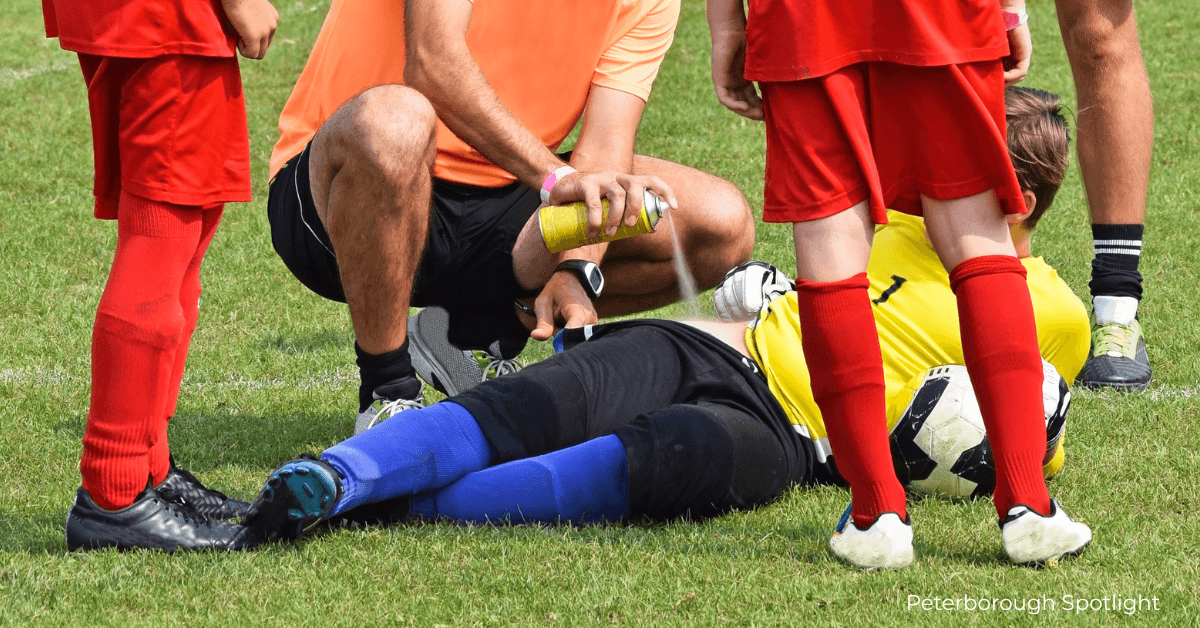 |
The Two-Minute Panic: Would Anyone Know What To Do? |
There is a moment nobody wants to be in. Someone chokes in a café.
And for a few seconds, everyone does the same thing.
They look around.
Who knows what to do?
That is the bit people do not like thinking about. Because most of us assume someone else will step forward.
A teacher.
But what if nobody does?
Peterborough has enough busy places where this matters: Ferry Meadows, football pitches, school events, cafés, workplaces, warehouses, community halls, pubs, churches, mosques, care settings, charity events, gyms, markets, theatres and family parties.
And the scary bit is not always the emergency itself.
It is the delay.
The two minutes of panic before someone starts helping.
Nadia from Woodston put it simply: “I don’t need to be a hero. I just don’t want to be the person standing there useless while everyone waits for someone else.”
That is the real question.
Would you know what to do if someone:
This is not about frightening people.
It is about workplaces, venues, sports clubs, schools, food businesses, community groups and families knowing whether they are relying on luck.
So let’s make a Peterborough safety list.
Where should basic first-aid training be taken more seriously?
And if you have ever been in a situation where someone needed help and everyone froze, what did you wish people knew
Where in Peterborough should more people know what to do in the first two minutes?
|
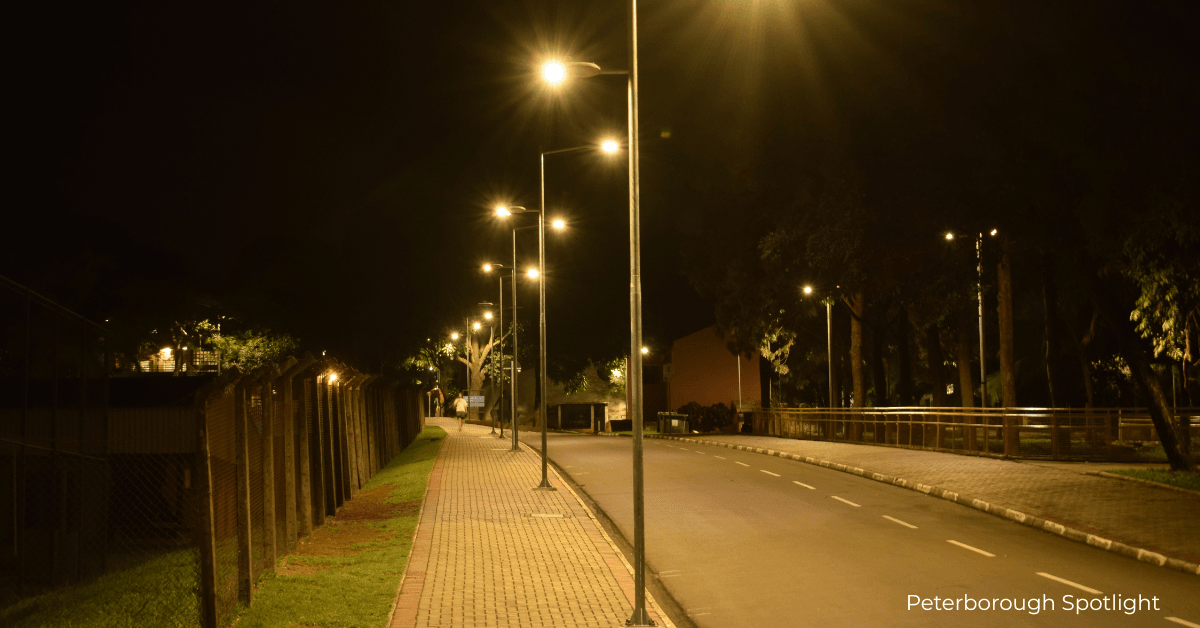 |
The 5pm Test: Does Peterborough Feel Safe Enough To Stay? |
Peterborough has the ingredients for a better evening economy.
Key Theatre on the Embankment.
But here is the bit people actually talk about. Not just what is open.
Whether it feels worth staying.
And for a lot of people, that comes down to safety.
Not dramatic crime headlines.
Just normal, everyday confidence.
Would you walk from the car park to the theatre after dark without thinking twice?
That is the real 5pm test.
Because a city centre does not come back to life just because someone says “support local.”
People stay when they feel there is a reason to stay.
And they come back when the whole evening feels easy enough.
Parking matters. Food matters. Events matter. But the walk between them matters too.
On Thursday 18 June, Key Theatre lists Simon Evans: Staring At The Sun, with tickets from £22. New Theatre lists Lipstick On Your Collar, with tickets from £26. So the question is not whether anything is happening.
It is whether people feel confident building an evening around it.
Becky from Fletton had the short version: “I don’t need a massive night out. I need somewhere to park, somewhere decent to eat, and I need to feel fine walking back afterwards.”
That is the line.
If Peterborough wants people to stay in town after 5pm, it needs more than events.
It needs:
And yes, the practical details still matter.
Queensgate lists parking at £2.80 up to 2 hours, £4.30 up to 4 hours and £8.30 up to 8 hours, with free parking after 5pm on Thursdays.
So let’s build the Peterborough after-5pm list.
Where feels good after dark?
Where feels awkward?
Where would you send someone before or after a show?
Where needs better lighting, cleaner routes, more open venues or a stronger sense that someone is paying attention?
Tell us:
No vague “town needs improving.”
Name the place. Say what would make it better.
What would make Peterborough city centre feel easier and safer to use after 5pm? |
 |
Mary’s Child And The Peterborough Help List: Who Needs A Van, A Room, A Skill Or An Hour? |
Not every local cause needs the same thing.
Some need money.
But others need something much more specific.
A van for one afternoon.
A hairdresser who could help someone before an interview.
That is the bit people often miss.
“Donate if you can” is fine.
But Peterborough has people and businesses who could help in other ways if they knew the exact ask.
Mary’s Child is a good local example of why this matters.
Their work is rooted here in Peterborough: practical support, community connection, and helping people close to home rather than disappearing into a big national charity machine.
But even for groups like Mary’s Child, support is not always just “send money.”
Sometimes help looks like:
Claire in Werrington put it like this: “I can’t write big cheques, but I could give two hours, a lift, or help someone fill in a form. I just need to know who needs what.”
That is what we want to build for charities like Mary's Child
A practical Peterborough help list.
Not a guilt trip.
Not vague “support local causes” wording.
Actual needs.
For example:
Food And Household Support
Community Cafés And Warm Spaces
Youth Groups And Sports Clubs
Older Residents And Carers
Animal Rescues And Pet Support
Local Advice And Crisis Support
Small Charities And Community Groups
Mary’s Child shows the kind of local cause we want Spotlight readers to notice: close enough to see, practical enough to understand, and local enough that help can make a visible difference.
Now we want the wider Peterborough help board around that idea.
Tell us:
Because sometimes the thing that changes a week is not a grand campaign.
It is someone saying:
“I’ve got a van Thursday.”
What does a Peterborough group need right now — specifically? |
 |
What Is Peterborough Pretending Is Fine? |
Let’s stop being polite for a minute.
What is Peterborough pretending is fine?
Not in a wild rant way. In a “we all know this is awkward” way. Possible answers: Public services keeping up with growth Immigration being discussed badly City centre drift Affordable housing Council finance Young people being left behind Fenland, villages and older neighbourhoods being talked about like side notes “Peterborough keeps getting described as up-and-coming,” said fictional reader Dev from Eastgate. “At some point I’d like it to actually arrive.” “I don’t want another glossy plan,” said fictional reader Sarah from Bretton. “I want the thing fixed.” Your turn. What is Peterborough pretending is fine? |
 |
Tiny Quiz: Which Peterborough Argument Are You? |
Pick your type. The Growth Realist The Election Watchdog The Showground Defender The City Centre Loyalist The Youth Jobs Worrier The “Fix The Basics First” Voter The Local Recommendation Machine Tell us your type. |
 |
Who Would You Send A Friend To Before They Made An Expensive Mistake? |
This is the trust list. Who would you send someone to before they:
We want local people and businesses who explain things clearly, turn up, do not make people feel daft, and actually help. Categories:
Give us the name, area, what they helped with, and why you would recommend them. |
 |
Run A Local Business? Show Up Where Readers Are Already Talking. |
If your business helps people solve one of these everyday Peterborough problems, this is exactly the kind of conversation you should be part of. Food. People do not only need adverts. They need reasons to trust, remember, click, visit, ask, recommend and come back. That is what Peterborough Spotlight is built to create. If you run a local business and want to see where you could fit, take the business fit quiz or message us
|
 |
Final Word: Peterborough Can Grow, But It Can’t Just Be Told To Cope |
That is the thread running through this issue.
Peterborough can grow.
It can take more homes.
But it cannot do all that on good intentions and a few glossy plans.
Not without roads that work.
Peterborough does not need another round of “it has potential.”
People here have heard that for years. Potential does not help a teenager get an apprenticeship.
What matters now is proof.
What gets funded?
So this week, tell us one thing Peterborough needs to stop pretending is fine.
A road.
Next issue, we’ll be digging further into the practical side of this: the Peterborough places people still rate, the businesses readers trust.
The local routes and costs people wish they’d known earlier, and the experts who can actually help when life gets expensive, awkward or confusing.
Because the best local knowledge is usually already here.
It is just stuck in people’s heads, group chats and “I wish someone had told me that” conversations.
Let’s get it out where the rest of the city can use it.
|
Peterborough Spotlight is a free, independent newsletter bringing clarity, context and practical stories from across the county, property, money, local business, families, homes and everyday life.
We work with a small number of trusted local partners each month whose expertise genuinely helps our readers live, work and move more confidently from mortgage specialists and financial advisers to home services, health, family and community experts.
To talk partnerships or share a story:
Now published every week — designed for people who live and think locally it's your Peterborough Spotlight. |