
Sally’s Savers: 10 Small Changes That Can Add Up To Serious Savings |
Ten ways to make your money work harder — including one that could uncover cash you’d forgotten you had. |
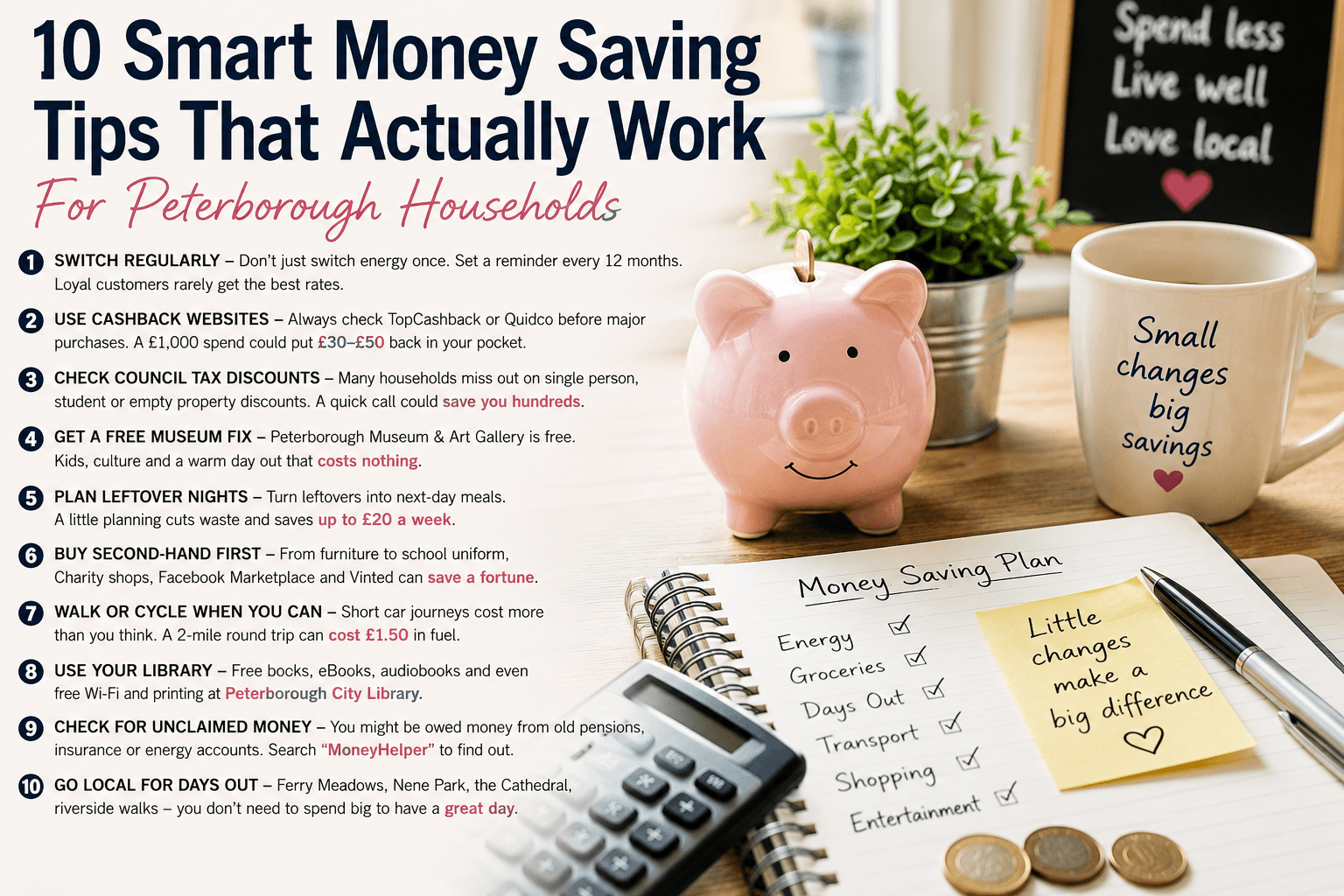
When did you last go looking for money?
Not earning more of it. Not cutting back. Actually looking for money that may already be yours.
An old workplace pension you haven't thought about for 15 years.
Cashback you could have earned on something you were buying anyway. A council-tax discount you've never checked. Or £30 disappearing every month because buying new has become the automatic option.
That's the idea behind this edition of Sally's Savers.
We've picked ten different places where money can hide, leak away or simply be spent unnecessarily.
Some might save you a few pounds.
One or two could potentially uncover considerably more.
Let's go hunting.
1. Put every contract end date in your calendarBroadband, mobile, insurance, energy and other contracts have an annoying habit of becoming expensive when nobody is paying attention.
Don't rely on remembering.
Find the renewal or end dates and put them in your phone with a reminder several weeks beforehand.
Then compare before you renew.
The saving isn't necessarily switching every time.
It's avoiding the “I forgot, so I suppose I'll leave it” tax.
2. Check for cashback before pressing BuyThis one takes less than a minute.
Before making a planned online purchase, check whether a reputable cashback service offers anything for the retailer you're about to use.
It can be particularly worthwhile for larger purchases, insurance, broadband, travel and household items.
But there's an important Sally rule:
Cashback is a bonus on something you were already buying never a reason to buy it.
Saving £12 on something you didn't need isn't saving £12.
3. Check whether your council-tax bill knows about your lifeCouncil tax doesn't necessarily change just because your circumstances have.
Living alone can qualify someone for the 25% single-person discount, while other reductions and support may apply depending on circumstances.
Someone moved out?
Income changed?
Household changed?
Don't assume the bill automatically knows.
Check whether you're paying what you actually need to pay.
4. Have one genuinely free day out each month
Here's a money-saving trick that doesn't require staying home. Find something locally that costs nothing to enter.
A museum. Park. Walk. Heritage site. Exhibition. Community event. Library activity.
Take a picnic or allow yourself the money for a coffee.
If a family normally spends £40–£60 on an attraction, replacing just one paid day out with a free one each month can make a noticeable difference over a year.
You're still going out.
You're simply changing where.
5. Create a weekly “eat me first” night
Most households have one.
The slightly random collection of food approaching its final days in the fridge.
Half a pack of mushrooms. Three potatoes. Cooked chicken. Half an onion. Cheese. A lonely pepper.
Once a week, open the fridge before deciding what dinner is.
Soup, omelettes, curries, pasta, stir-fries, jacket potatoes and homemade pizzas are remarkably forgiving.
Call it Eat Me First Night.
It sounds considerably better than “leftovers”.
6. Introduce the 24-hour second-hand rule
Before buying certain things new, wait 24 hours and look second-hand first.
It works particularly well for:
You don't have to buy second-hand.
You just have to look.
Sometimes you'll discover the £80 thing you were about to order is available locally for £20.
And sometimes you'll discover you didn't want it badly enough to spend anything at all.
7. Find one journey a week that doesn't need the car
We're not suggesting you cycle to Scotland.
Look for the silly journeys.
The shop that's a 12-minute walk away.
The school pickup where walking is realistic.
The trip into town where parking costs almost as much as what you're buying.
Replace just one short car journey each week when it's practical. Fuel and parking savings accumulate without requiring you to reorganise your entire life around a bicycle.
8. See what your library card can replace
This is one of the most underrated money-saving tools around. Modern libraries can offer far more than shelves of books, with services potentially including eBooks, audiobooks, newspapers, magazines, computers, Wi-Fi, children's activities and other resources.
Before paying for another book, audiobook or activity, check what's already available through your local library.
The best subscription may be the one that costs you nothing.
9. Hunt for money you've genuinely forgotten
This is Sally's favourite.
Have you had several employers?
Moved house?
Opened savings accounts years ago?
Started pensions you've since forgotten about?
Money doesn't necessarily follow you around waving its arms.
Old workplace pensions in particular can become surprisingly easy to lose track of over a working lifetime.
Use official tracing services to investigate old pensions and accounts rather than companies making unsolicited promises to recover money for a fee.
You may find nothing.
But this is one money-saving exercise where the result could potentially be hundreds or even thousands of pounds rather than £3 off the weekly shop.
10. Become a tourist in your own area
This is the opposite of tip four.
Instead of merely looking for somewhere free, ask:
What do people travel here to see that I've never bothered visiting?
Parks, walks, historic buildings, markets, villages, nature reserves and local events can all make inexpensive days out.
Make a list of ten places within roughly half an hour of home that you've either never visited or haven't visited for years.
Then work through it.
A local day out usually means less fuel, no hotel and considerably less temptation to spend simply because you're “away”.
SALLY'S SAVER CHALLENGE
Here's the challenge for this edition.
Don't attempt all ten.
Choose three:
One that could save money every month.
That's enough.
Money-saving works much better when something actually gets done than when 47 clever ideas get bookmarked for later.
Trace An Old Pension GOV.UK Pension Tracing Service. |
0 Comments
Join the conversation
Be the first to comment
Share your thoughts above.