
Your Dog Was Fine With Fireworks Last Year So Why Are They Terrified Now? |
A dog that barely noticed the bangs last Bonfire Night can suddenly become frightened this year. What's changed and could owners be missing the warning signs? |
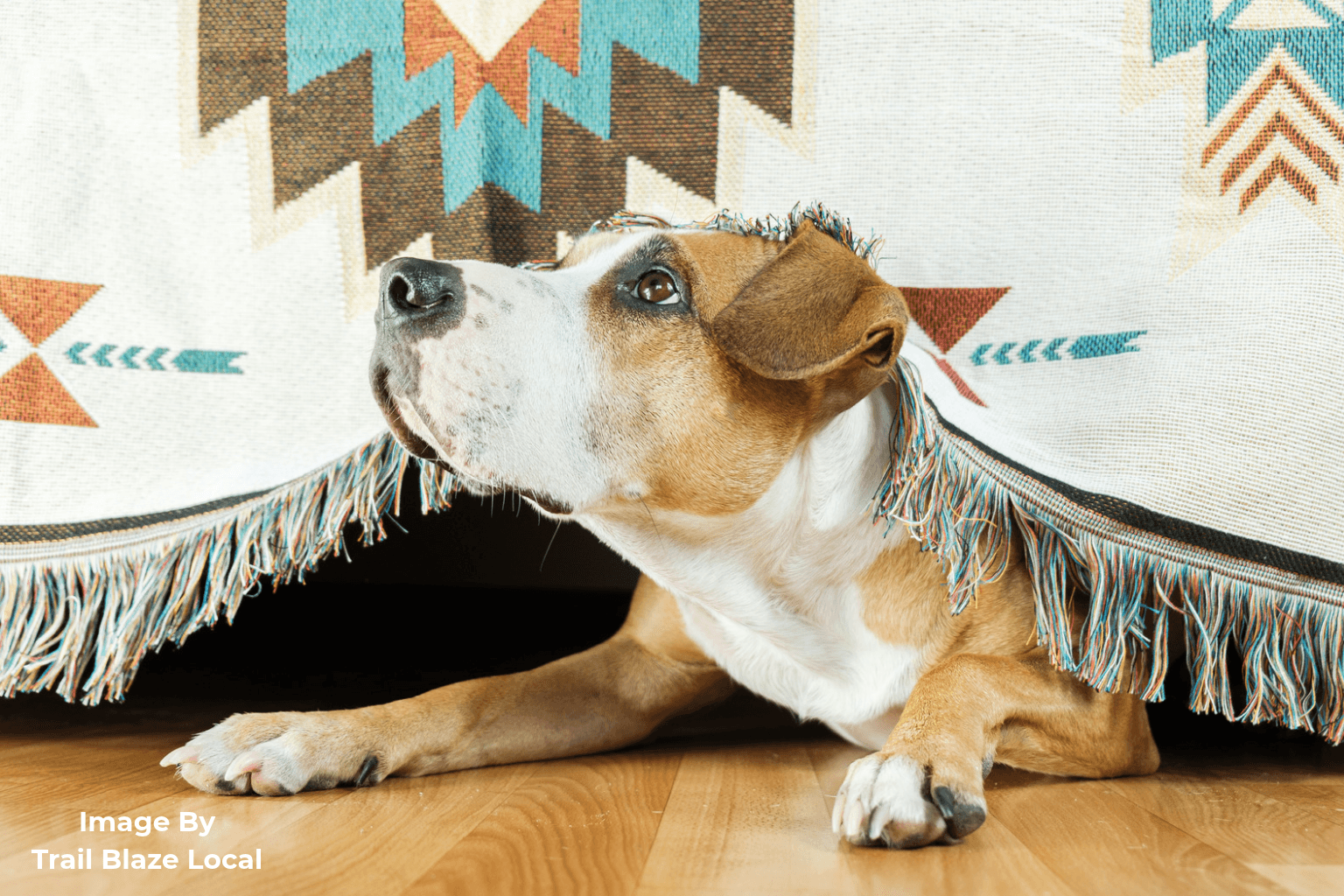
Last year, your dog didn't even flinchImagine this.
Last November, your dog barely lifted their head when the fireworks started.
They carried on chewing a toy, stretched out on the sofa and eventually fell asleep.
This year, the first distant bang sends them racing upstairs.
They're panting, trembling or squeezing themselves into a corner.
And you're asking the obvious question:
What's happened to my dog?
It's tempting to assume that dogs either fear fireworks or they don't. But sensitivity to loud noises can develop or change over time even in animals that previously appeared perfectly relaxed.
And that means last year's calm behaviour isn't necessarily a guarantee of this year's reaction.
The frightening experience you might never have noticedDogs learn from experiences, including unpleasant ones.
A particularly loud firework, an unexpected explosion close to home or a series of bangs during a stressful evening may change how a dog responds the next time.
Sometimes the connection is obvious.
The dog panics during a display and becomes wary of similar sounds afterwards.
But sometimes owners don't witness the moment that triggers the change.
Perhaps the dog was alone when fireworks began.
Perhaps a sudden bang happened during a walk.
Or perhaps several smaller experiences gradually made the sound feel threatening.
The important point is that a dog doesn't need to have been frightened of fireworks all its life to develop a fear of them.
Age can change the picture
A dog's response to noise may also change as they get older.
Changes in health, mobility, hearing or general confidence can affect how an animal experiences its surroundings.
An older dog that becomes unusually sensitive to noise may be dealing with more than a simple behavioural issue.
Pain, illness and age-related changes can sometimes contribute to new or worsening anxiety.
That's why a sudden change in behaviour deserves attention rather than dismissal.
If your dog has developed a new fear, particularly alongside other changes in behaviour or health, speak to your vet.
The warning signs aren't always dramaticMost people recognise a frightened dog when it's shaking or hiding.
But the earlier signs can be much easier to miss.
A dog may begin pacing, become unusually clingy, repeatedly lick its lips or struggle to settle.
Others stop taking treats, refuse to go into the garden or become unusually alert to sounds outside.
Some dogs don't make much noise at all.
They simply become very still.
That matters because a quiet dog isn't necessarily a comfortable dog.
Learning to recognise your own dog's normal behaviour can help you notice when something has changed.
Could your reaction make things worse?
When a dog panics, owners naturally want to help.
But there's an important difference between comforting a frightened animal and accidentally increasing the pressure on them.
Forcing a dog to confront fireworks, dragging them out of a hiding place or insisting they go outside while frightened can make an already difficult situation worse.
Equally, you don't need to ignore a dog that's seeking reassurance.
Calm, gentle comfort is fine if your dog wants it.
Give them choices. Let them move to a quieter area, settle near you or retreat to a familiar safe space.
The goal isn't to prove that fireworks are harmless.
It's to help the dog feel as safe as possible.
Why the days before Bonfire Night matterIn Peterborough, fireworks aren't necessarily confined to one evening.
With Bonfire Night falling on Thursday 5 November and the city's major Embankment event scheduled for Saturday 7 November, dogs may encounter unexpected noise across several nights.
For a dog that's beginning to feel anxious, that unpredictability can be particularly difficult.
It makes sense to plan walks before dark, keep dogs securely indoors when displays are expected and make sure identification details are up to date.
Curtains, familiar background sounds and access to a comfortable resting place may also help some dogs.
But these steps are about managing the immediate environment.
They aren't a substitute for addressing a serious noise fear.
Don't wait until next November to deal with it
If your dog is already terrified, Bonfire Night itself is not the time to begin an ambitious training programme.
Helping a dog become more comfortable with sounds generally takes careful, gradual work when the animal is calm and able to learn.
Pushing too quickly can backfire.
For severe or persistent fear, start with your vet.
They can check for contributing health problems, discuss appropriate short-term support and refer you to a suitably qualified behaviour professional if needed.
The weeks and months after fireworks season can then become an opportunity to work on a longer-term plan.
What Peterborough dog owners should remember
Perhaps the biggest mistake is assuming that because a dog coped last year, they'll cope this year.
Dogs change. Their experiences change. Their health changes.
And sometimes their reaction to a familiar sound changes too.
If your previously relaxed dog suddenly becomes frightened, take that change seriously.
Don't force them to face the noise. Don't assume they'll simply grow out of it.
And don't wait for the fear to become overwhelming before seeking help.
For Peterborough owners looking for support with their dog's behaviour, local dog trainer Raimonda of Smarter Paws Hub is a relevant professional to contact about training and behaviour support. |


0 Comments
Join the conversation
Be the first to comment
Share your thoughts above.