
The £20,000 House Deposit: Who Gets There First? |
Three people. Same £20,000 target. One gets there years before the others and the difference isn't just their salary. |
You want to buy your first home.
Then somebody casually says:
“You'll need about £20,000 for the deposit.”
Right.
Where exactly is that supposed to come from?
For most first-time buyers, £20,000 isn't sitting in a savings account waiting to be used. It has to be built month by month while you're still paying rent, bills, food, petrol and everything else life throws at you.
So let's make this real.
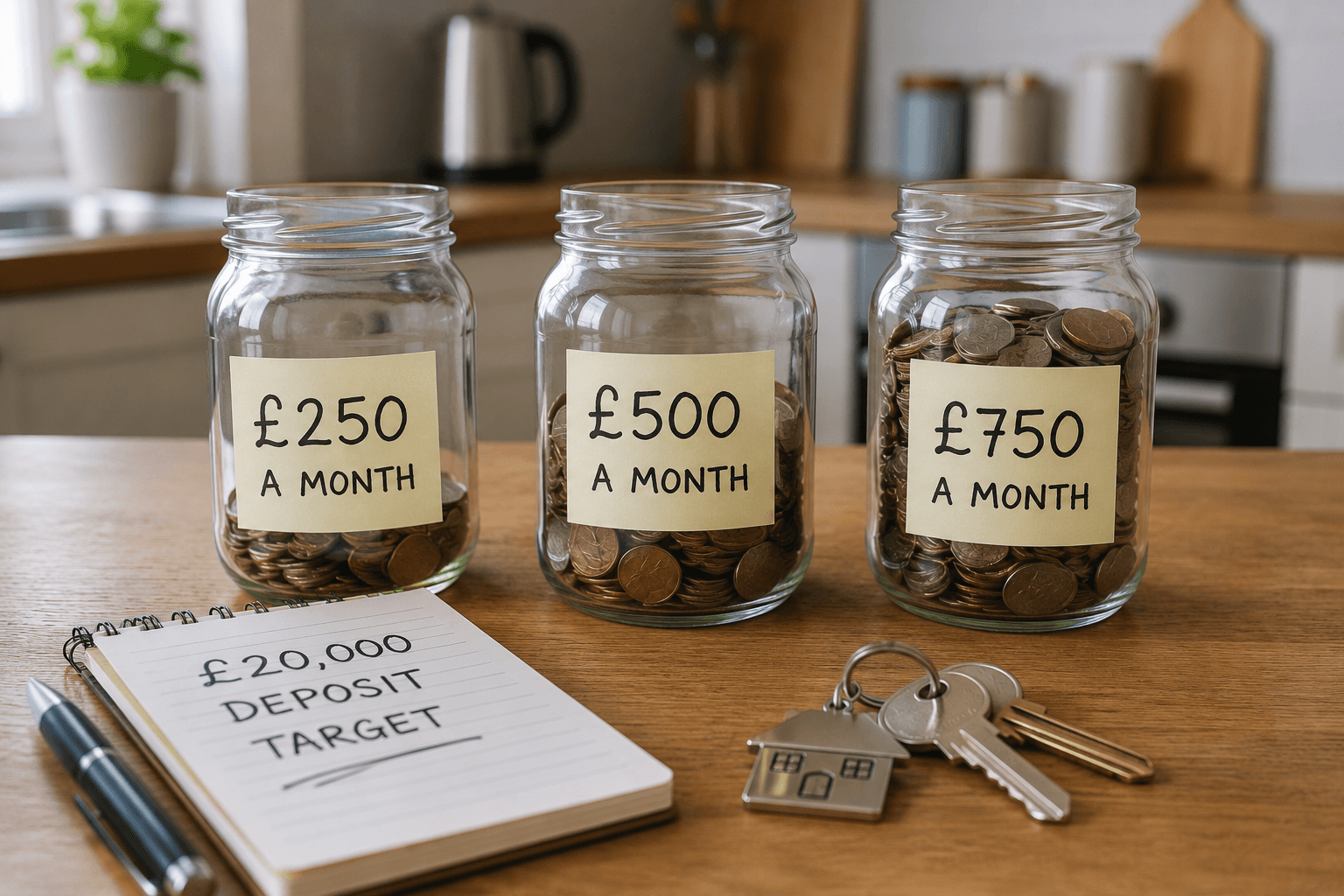
Three people want to save the same amount: £20,000.
But they're starting from very different places.
Saver One: £250 a month
Let's call her Chloe.
After rent and everything else, Chloe manages to put away £250 every month.
At that rate, ignoring interest for a moment:
£20,000 ÷ £250 = 80 months.
That's about:
6 years and 8 months.
That's a long time.
And plenty can happen in nearly seven years including house prices moving while you're trying to catch them.
Saver Two: £500 a month
Now meet Dan.
He's able to save £500 a month.
Same £20,000 target.
His time?
40 months.
Or roughly:
3 years and 4 months.
Same destination as Chloe.
But he's there more than three years earlier.
Saver Three: £750 a month
Then there's Aisha.
She's managed to get her monthly saving up to £750.
At that pace, £20,000 takes just under:
27 months.
A little over two years.
So our three buyers have exactly the same deposit target, but very different journeys:
£250/month → about 6 years 8 months
£500/month → about 3 years 4 months
£750/month → about 2 years 3 months
That's quite a difference.
But there's something missingThose numbers assume they simply save cash and earn nothing on it.
In reality, eligible first-time buyers may have another option. A Lifetime ISA can add a 25% government bonus to qualifying contributions.
Put in £4,000 and the government can add £1,000. There are rules, though.
You generally need to be aged 18 to 39 when you open one, there are annual contribution limits, and using the money for something other than a qualifying first home or later life can trigger a withdrawal charge.
So don't just open one because somebody on TikTok said it's free money.
Check the rules first.
The target might not be £20,000 eitherThis is another trap.
People talk about “the deposit” as though there's one magic number.
There isn't.
A £20,000 deposit represents:
10% on a £200,000 home
but only:
8% on a £250,000 home.
And the deposit isn't necessarily the only cash you'll need.
There may also be solicitor's fees, a survey, mortgage costs, moving expenses and the inevitable first-week trip to buy things you somehow never realised a house needed.
So your real target might be:
deposit + buying costs + emergency cushion. That's a much better number to work towards.
The question isn't just “How much can I save?”
Try turning it around:
“When do I want to buy?”
If your target is £20,000 and you want to get there in four years, that's roughly:
£417 a month
before allowing for interest or any qualifying LISA bonus.
Want to do it in three?
Around:
£556 a month.
Two years?
Around:
£833 a month.
Suddenly the goal becomes much more concrete.
And if the number is impossible, that's useful to know too. You can change the timescale, the property budget or the amount you're trying to save.
Don't make yourself miserableSaving for a home shouldn't mean spending the next five years refusing every coffee, meal out or weekend away.
Big changes often beat obsessing over tiny ones.
An extra £150 a month saved from a cheaper car, lower rent, extra work or moving back home for a period where that's actually possible can knock a surprisingly large amount of time off the journey.
The important thing is knowing your number.
Not your mate's.
Not somebody on Instagram who apparently bought a house at 23 while running six businesses.
Yours.
Because £20,000 sounds enormous.
£417 a month for four years sounds like a plan.
And that's a much better place to start. |
0 Comments
Join the conversation
Be the first to comment
Share your thoughts above.