
Five September Garden Tips Including Something You Can Leave Alone |
Keep the flowers going, plan some spring colour and resist cutting everything back. Here’s where to start, even if your garden is mostly pots. |
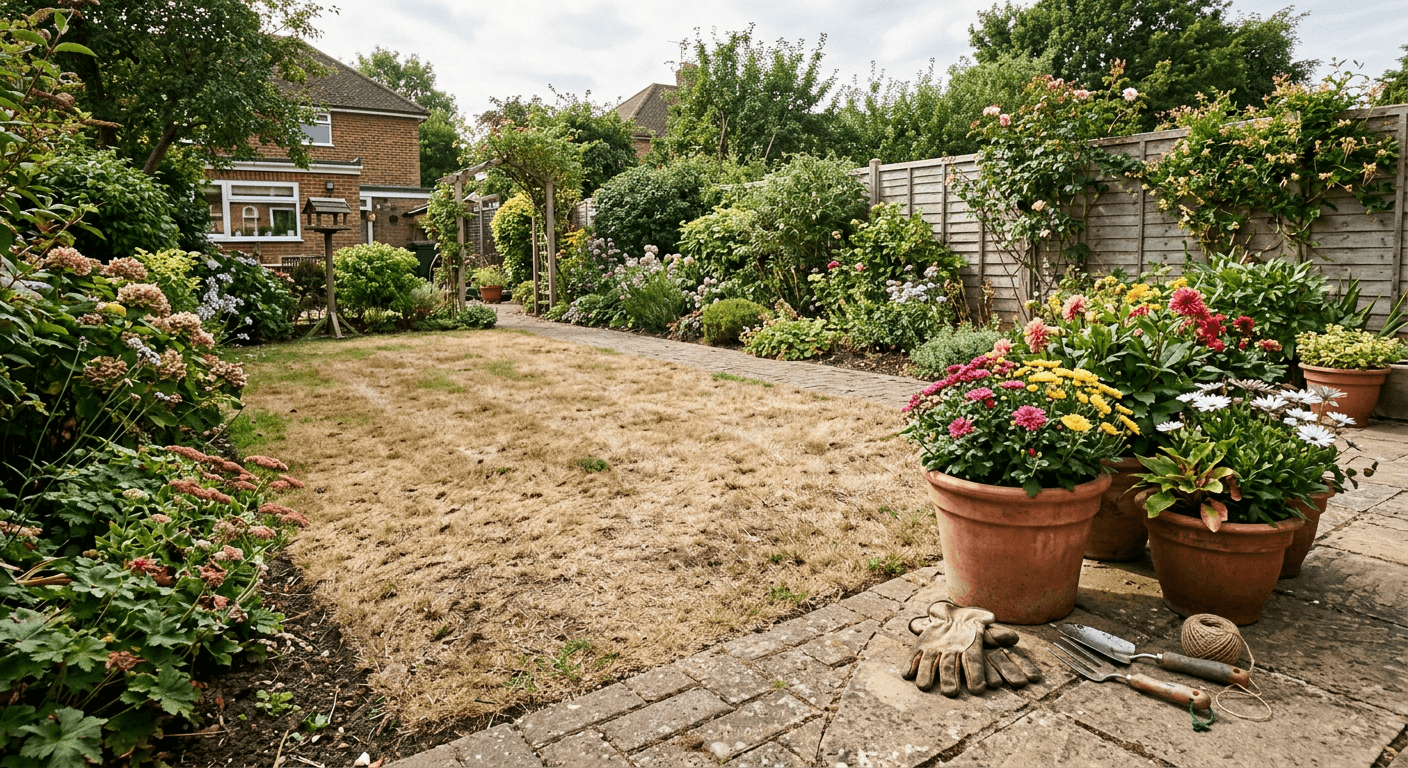
September can leave you looking at the garden wondering what to do next.
Some flowers are still going strong.
Others look finished. And the garden centre has bags of bulbs competing for your attention.
Before you spend Saturday cutting everything down or buying enough plants to fill somebody else’s garden take a look at what you already have.
These five tips draw on advice from the Royal Horticultural Society, the gardening charity known as the RHS. Pick the ones that suit your space. A couple of pots by the door count.
1. Give flowering pots a little longer
A hanging basket doesn’t need emptying because the calendar says autumn.
If it is still flowering, remove the faded flowers, keep checking its water needs and feed as directed on the product label.
Removing old flowers is called “deadheading”; gardeners do it to help keep the display going.
The RHS says this care can keep hanging baskets flowering into mid-autumn. Let the plant’s condition decide when you replace it. There’s no prize for being first to throw out a perfectly good display.
2. Plant spring bulbs and check the timing
Bulbs are the little underground food stores from which plants such as daffodils grow.
Planting them now gives you something to look forward to after winter.
The RHS recommends planting daffodils, crocuses and hyacinths preferably by the end of September. Tulips have a later slot: November.
You can grow bulbs in pots as well as in the ground.
Check the packet for planting depth and spacing, and choose a position that suits that particular plant.
Most daffodils and tulips prefer sunshine and soil that lets excess water drain away.
If you’re buying for a pot, tell the nursery or garden centre its size and where it will stand. That gives them more to work with than “something colourful, please”.
3. Tackle that bare patch of lawn
If a patch of grass has disappeared beneath summer foot traffic and the excessive dry spell, September can be a chance to repair it with grass seed.
Timing depends on the ground.
The RHS advises sowing when the soil is damp after rain, giving the new grass time to establish during autumn.
Prepare the patch first and follow the seed packet’s instructions.
If the ground is still very dry, wait for suitable conditions.
A date in the diary cannot tell you how damp your lawn is.
Start with the patch that annoys you most. You don’t have to turn the whole garden into a lawn renovation project.
4. Choose one plant that will come back next year
If you’re tired of replacing the same gap every summer, look at perennials: plants that live for several years.
Late September can be a good time to plant them because the soil often retains warmth while moisture increases.
Before shopping, take a photograph of the space and note how much sun it gets. Ask how tall and wide the plant will become, too.
The small pot you carry home may grow into something that needs considerably more elbow room.
A plant chosen for your conditions has a better starting point than one bought because it looked lovely beside the till.
5. Leave some finished flowers standing
This is the tip that saves you a job.
Some plants leave attractive seedheads the structures holding their seeds after the flowers fade.
These can give the garden shape through winter, provide food for birds and shelter insects.
You don’t need to leave every tired stem.
But before cutting a whole flower bed down, look for firm, upright seedheads you could keep.
If you’re unsure what you’re looking at, identify the plant before reaching for the secateurs, the hand-held cutters used for trimming stems.
Different plants need different treatment.
What’s puzzling you in your garden?
Send us your question and, if you can, the plant’s name or a photograph.
Tell us what you’ve tried so far.
Your question could help shape a future gardening Q&A.
And if somebody you know is preparing to cut the entire garden back this weekend, send them tip number five first.
Quick Garden Tips Summary
Leave some standing seedheads for winter interest and wildlife.
|




0 Comments
Join the conversation
Be the first to comment
Share your thoughts above.