
Does Your Child Really Need A Dentist Every Six Months? |
Lots of parents grew up with the six-month rule. But that isn't actually how NHS dental check-ups are supposed to work. |
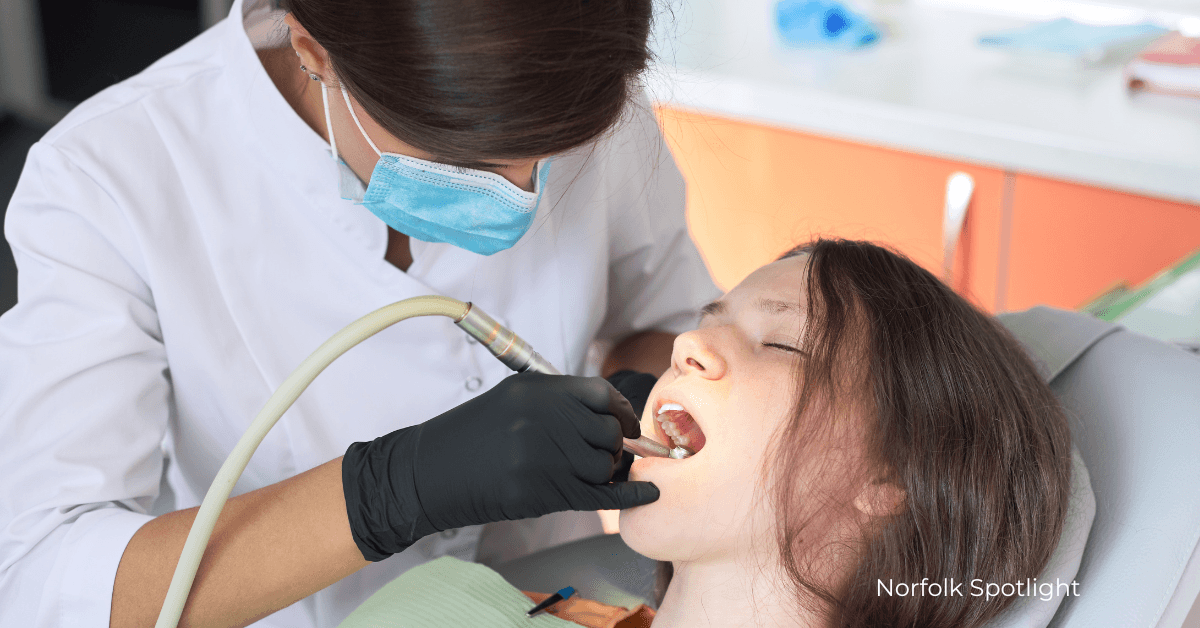
“See you again in six months.”
For years, that was almost automatic at the dentist.
So if you've got children, you might assume they should be sitting back in that chair twice a year too.
Not necessarily.
NHS guidance says the gap between dental check-ups should depend on the person's teeth, gums and risk of future problems. For children under 18, that can mean anything from three months to 12 months.
So where did the six-month rule go?
Your child doesn't have the same teeth as every other childThis is the important bit.
A child who's had decay, needs treatment or is considered at higher risk may need to be seen more frequently.
Another child whose teeth are healthy and who is considered lower risk may be given a longer gap.
NHS England's current guidance specifically puts children with a three-month recall among its higher-priority groups, while children on nine- or 12-month recalls can be lower priority depending on their circumstances.
In other words:
Six months isn't wrong.
It's just not an automatic rule for everybody.
“But shouldn't children go more often just in case?”
It's an understandable question.
Children's teeth can change quickly, and spotting problems before somebody ends up with toothache obviously matters.
But the current system is supposed to be based on the individual child, rather than everybody being automatically booked at exactly the same interval.
NICE says the maximum gap for someone under 18 should be 12 months, with possible intervals of three, six, nine or 12 months.
And NHS England's newly published June 2026 clinical standard continues to call for children's recalls to be based on their dental risk.
What should Peterborough parents actually do?
At your child's next check-up, ask one very simple question:
“When do you want to see them again and why?”
If the dentist says three months, six months, nine months or a year, there should be a clinical reason behind that recommendation.
And don't wait for the next routine appointment if something goes wrong in between.
Pain, swelling, a broken tooth or another dental problem is a reason to contact the dental practice rather than watching the calendar.
And NHS dental treatment for children?
Here's something worth remembering when household bills are already painful enough.
NHS dental treatment is free for children under 18, and also for under-19s who are in qualifying full-time education.
The harder problem for some families, of course, can be finding NHS dental access in the first place.
And that's a separate Peterborough question worth us digging into.
So forget the automatic six-month ruleYour child's next check-up might be in six months.
It might be sooner.
It might be later.
What matters is that the dentist has looked at your child's actual dental health and risk, rather than everybody being treated exactly the same.
So next time you're told:
“We'll see them again in…”
don't just reach for your phone calendar. Ask:
“Why that long?”
It's a perfectly reasonable question. |
0 Comments
Join the conversation
Be the first to comment
Share your thoughts above.