
Could Your Peterborough Council Tax Band Be Wrong? Here’s How To Check |
Council Tax bands in England are based on 1991 property values. If similar homes nearby are in a lower band, you can check the Valuation Office list and challenge with evidence |
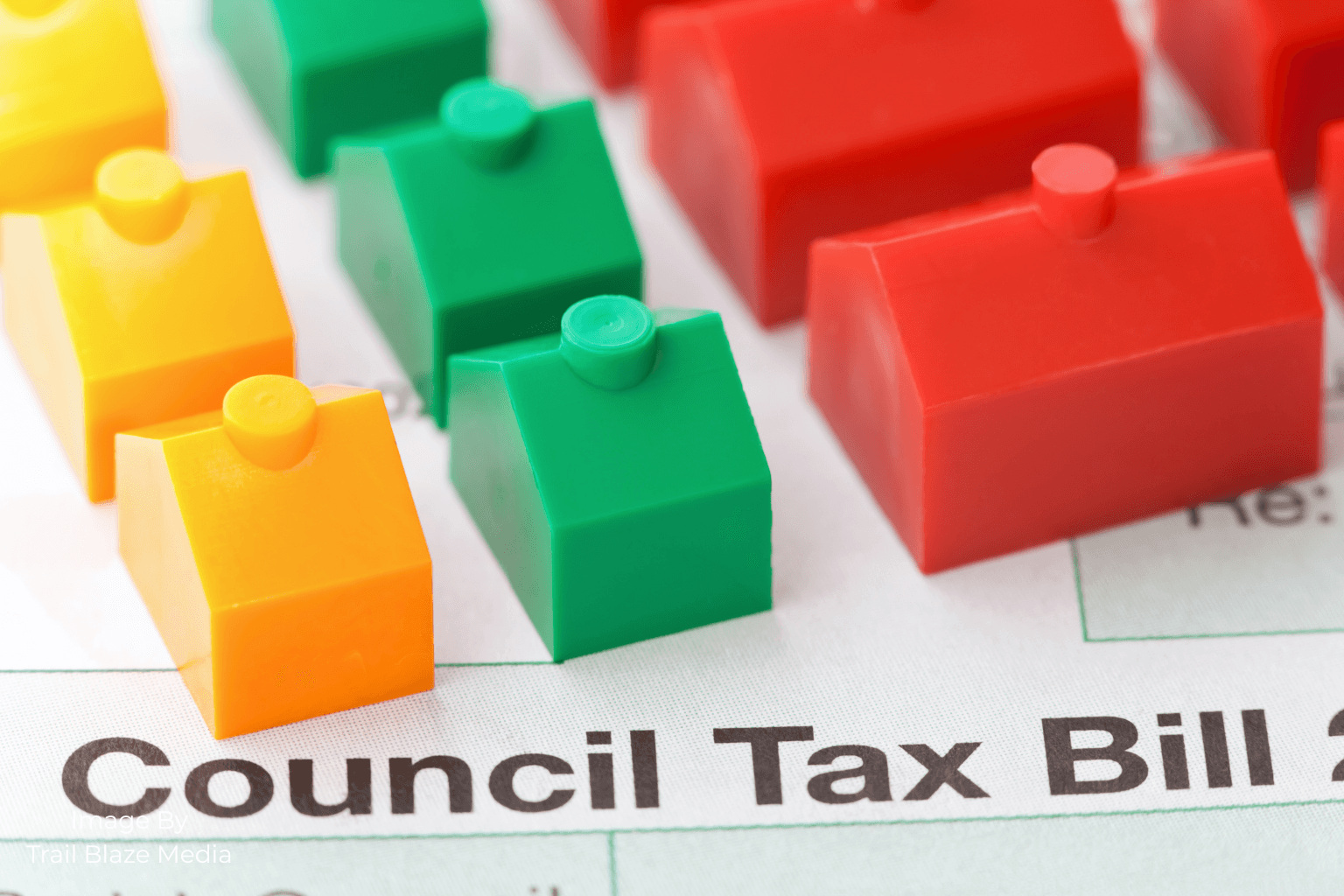
Could Your Peterborough Home Be in the Wrong Council Tax Band?
Council Tax is one of those bills that arrives and, for most of us, that's that.
You look at the amount.
Possibly complain about the amount.
Then pay it.
But there's another number on the bill that's much easier to overlook:
Your Council Tax band.
And that isn't necessarily set in stone.
Homes in England are placed into Council Tax bands based on what they would have been worth on 1 April 1991.
Yes, 1991.
The year Terminator 2 arrived in cinemas, Bryan Adams spent what felt like several years at number one and most of us had never heard of the internet.
Yet those 1991 property values still sit behind the Council Tax bands we use today.
If you think your Peterborough home has been put into the wrong band, you can challenge it.
But don't start filling in forms just yet.
Start with the houses around you.
First, Find Out What Your Neighbours Are Paying
The easiest first step costs nothing and takes a few minutes. Use the official GOV.UK Council Tax valuation list to look up your property.
Then look at similar homes nearby.
And by similar, we mean actually similar.
If yours is a three-bedroom semi, compare it with other three-bedroom semis of a similar age, size and design.
The enormous detached house around the corner isn't much help. Neither is the tiny bungalow opposite.
Ideally, you're looking for comparable properties on the same street or estate.
What band are they in?
If yours is Band D and several almost identical homes nearby are Band C, you've found something worth investigating.
That doesn't automatically mean your band is wrong.
But now you've got a reason to look further.
Don't Challenge Just Because Next Door Pays Less
This is where a little caution helps.
Two houses can look virtually identical from the pavement and still have differences that affect their Council Tax bands.
Size matters.
So does property type, age, style and design.
There may also be differences you can't see from outside.
So:
“My neighbour is Band C and I'm Band D.”
isn't necessarily enough.
What becomes more relevant is:
“Four houses the same size, age and design as mine on this estate are Band C, while mine is Band D.”
Now you've got a comparison.
Current government guidance says people requesting a band review may need to provide addresses for up to five similar properties in a lower band.
Those comparisons should be genuinely close matches.
This isn't a game of finding five cheaper Council Tax bands somewhere in Peterborough and hoping nobody notices.
The Six-Month Rule Matters
There are two different routes for questioning a Council Tax band. In some circumstances, you have a legal right to challenge. This is called making a proposal.
That includes situations where you've been paying Council Tax at the property for less than six months, or where the Valuation Office has changed your band within the previous six months.
There are other circumstances too, including certain changes to the property or physical changes to the surrounding area.
If you've lived in your home for longer than six months and simply believe the original band is wrong, you can still ask for a band review.
But the same legal rights don't apply.
That's when having strong evidence from genuinely comparable properties becomes particularly important.
What If Something Around Your Home Has Changed?
Council Tax banding isn't only about comparing houses.
Changes to the property or surrounding area can matter in certain circumstances too.
For example, government guidance gives the construction of a new main road or supermarket as examples of physical changes to an area that could affect property values.
Changes to the property itself can also create grounds for a challenge in particular circumstances.
The rules here become more specific, so don't assume that every extension, new development or change in the neighbourhood automatically means your Council Tax band should change.
Check the official criteria first.
Could Challenging Actually Put Your Band Up?
Yes.
And this is the bit I'd read before pressing submit.
A Council Tax band challenge is about getting the band right.
It isn't an application for a discount.
When the Valuation Office examines the evidence, your band can go down, stay where it is or go up.
The government also warns that reviewing one property can lead to the bands of similar neighbouring properties being examined.
That doesn't mean you shouldn't challenge an obvious discrepancy. It means you should do your homework first.
If the evidence strongly suggests you're in the wrong band, that's very different from submitting a challenge because you'd quite like a smaller bill.
What Happens If You're Right?
If your band is changed, the Valuation Office tells the council.
The council then revises your Council Tax bill and pays any refund that's due.
Depending on the circumstances, that could make checking worthwhile.
But there's one thing you must not do while you're waiting.
Stop paying.
You need to continue paying your existing Council Tax bill while the challenge is being considered.
Don't decide that because you're disputing Band D, you're going to start paying what you think Band C should cost.
Keep paying the bill you've actually been issued until you're told otherwise.
Do This Before You Challenge
So, if you're sitting there wondering whether your Peterborough home is in the wrong band, don't make this complicated.
That's it.
You don't need to pay somebody to tell you what band the house three doors down is in.
The official list is available online.
And checking it doesn't commit you to challenging anything.
Five Minutes Could Tell You Whether It's Worth Investigating
This isn't one of those:
“Do this ONE TRICK and get £5,000 back!”
stories.
Most people who check may discover everything looks exactly as it should.
Fine.
You've lost five minutes.
But if you live in a row of near-identical Peterborough houses and yours is sitting in a higher Council Tax band than several comparable neighbours, that's something I'd want to know.
Check first. Compare second. Challenge only when the evidence gives you a reason.
Because while your Council Tax bill might feel inevitable, the band behind it isn't something you have to accept without ever looking.
Have You Challenged Yours?
We'd be interested to hear from Peterborough residents who've actually been through the process.
Did your band go down?
Did it stay exactly where it was?
How long did it take?
And what evidence made you question it in the first place?
Tell us your area, the bands involved and what happened but don't send us your full address or Council Tax account details.
Your experience could help others showing what the process is actually like for residents who've tried it.
Comment Below |
0 Comments
Join the conversation
Be the first to comment
Share your thoughts above.