
Chain-Free? Great News. So What Could Still Hold Up Your Move? |
A Peterborough home with no onward chain sounds like a quicker move. Here’s what to ask before you start planning around a completion date. |
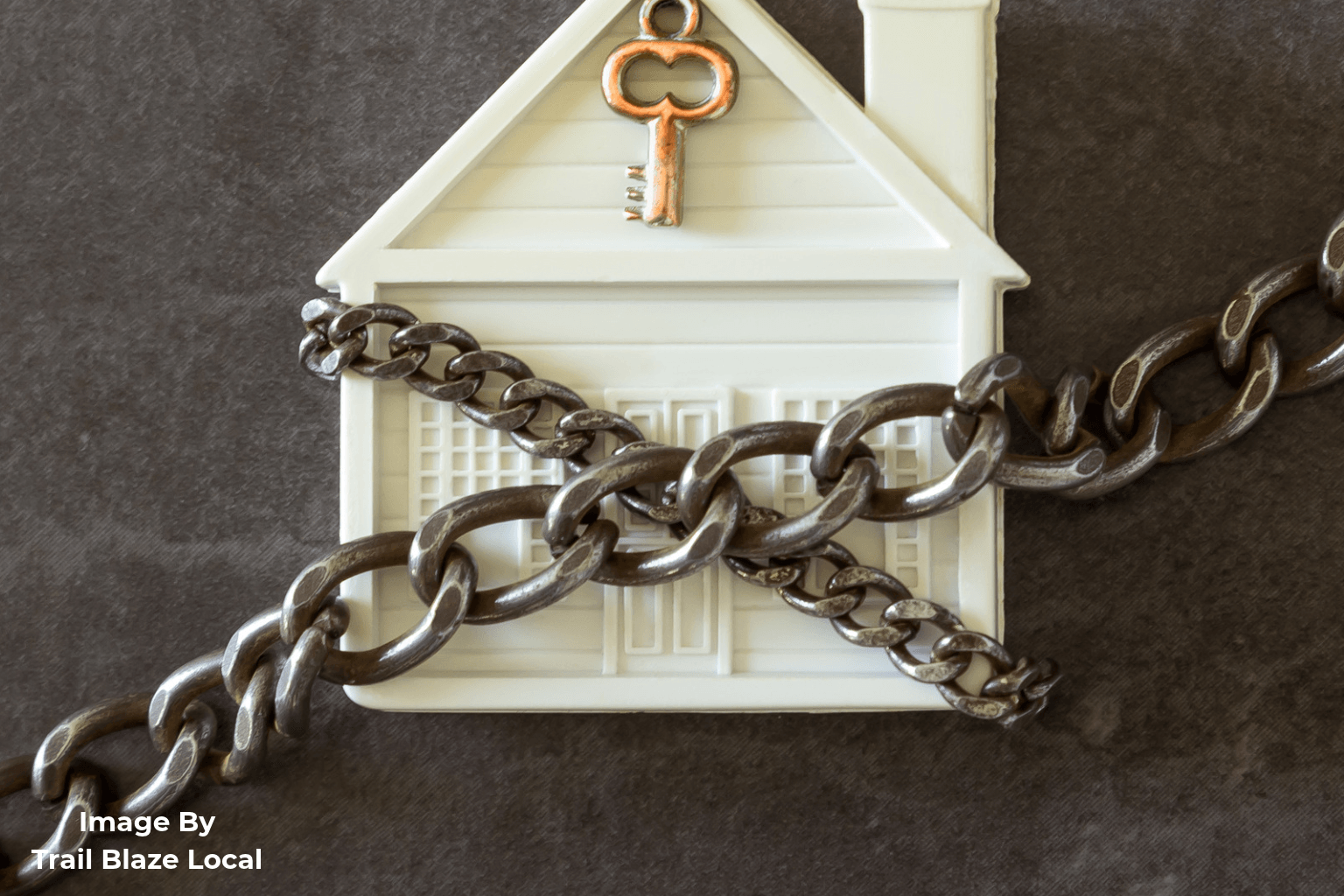
You spot “chain-free” on a Peterborough listing and immediately start mentally booking the removals van.
The sofa will go there. You could be in before Christmas. Someone should probably start collecting boxes.
Steady on. You haven’t viewed the kitchen yet. Chain-free is welcome news.
It can remove a whole set of linked transactions, along with the possibility that somebody three houses away in the chain changes their mind and brings everyone’s plans down with them.
But those two words deserve a follow-up question: whose chain are we talking about?
On a property listing, the agent will usually mean the seller has no onward purchase holding up their move. Perhaps the house is empty.
Perhaps the seller has somewhere else to live. The useful detail is whether they can actually leave without waiting to buy another home.
Your position is a separate matter.
A first-time buyer, or someone renting who has no property to sell, may also be chain-free. If you need to sell your current home to fund the purchase, that dependency still exists, however reassuring the listing looks.
The seller’s side might be clear. Yours might still involve a buyer who is waiting for a buyer.
Fewer people waiting. Still plenty to do.
A property chain is a series of linked sales and purchases. One delayed transaction can hold up the others.
Government selling guidance distinguishes between an open chain, where someone still needs to find a buyer, and a closed chain, where the necessary buyers are lined up.
A closed chain is further along, but it still has several transactions that need to reach the finish line.
Removing an onward chain can make life simpler.
It does not make the mortgage offer arrive, persuade the surveyor to overlook a worrying crack or answer a solicitor’s questions about the title.
Searches can uncover issues. Finance can fall through. A survey can change what you are prepared to pay — or whether you want the house at all.
And in England and Wales, either side can still pull out before contracts are exchanged. “Offer accepted” is a very welcome phone call. It is not permission to send the van.
Ask what “chain-free” means for this house
You don’t need to turn a viewing into a cross-examination. A few plain questions will tell you more than another enthusiastic adjective in the particulars:
Listen particularly carefully to the last answer.
“We’d all like to be in by the end of the month” is an ambition. Your conveyancer can help you understand how much work stands between that ambition and a date you can sensibly plan around.
Can being chain-free help your offer?
It can make you more attractive to a seller. Someone choosing between offers may value a buyer who has no home to sell and can show how the purchase will be funded.
That does not automatically earn you a discount. Sellers remain surprisingly attached to the price.
But your circumstances belong in the conversation alongside the amount you offer: your funding, whether you have instructed a conveyancer and how ready you are to proceed.
For a Peterborough buyer, the sensible response to “chain-free” is cautious pleasure, followed by a few questions.
Enjoy the prospect of fewer people holding up your move. Keep the removals quote handy.
Just let the legal work catch up with the furniture planning.
Sources:
|




0 Comments
Join the conversation
Be the first to comment
Share your thoughts above.