

Peterborough, Stop Selling Us The Vision Board |
There comes a point where people stop asking for “ambition” and start asking for basics that work.
A warm house. A fair rent. A dentist who can see the kids before toothache turns into a kitchen-table emergency.
A takeaway that arrives hot.
A birthday party that doesn’t cost like a wedding.
A local business that actually rings you back.
That’s the mood this week.
After last issue, we asked what people thought Peterborough actually needed.
The replies had a theme. Not another shiny promise. Not another glossy phrase. Not another “vision”.
Useful answers. Visible outcomes. Things people actually use.
So this week, we’re looking at the Peterborough version of everyday pressure: houses priced for hope, family costs creeping up, direct debits mugging the month, cold rooms, food value, awkward garage bills, stiff backs, city-centre arguments, council change, car decisions, and the local choices that actually hit people’s wallets.
Let’s get into it.
|
 |
The Highest Valuation Is Not Always Your Friend |
There is a very Peterborough property trap that sounds lovely at first.
You invite three estate agents round. One says your house is worth £265,000. Another says £275,000. The third beams, compliments the kitchen, says “we’ve got buyers waiting”, and floats £295,000.
Guess who gets the instruction?
Exactly.
The problem is that a flattering valuation can be expensive theatre.
It feels good for about ten minutes, then your home sits on Rightmove while buyers in PE1, PE2, PE3 and PE4 buyers scroll straight past.
This matters because Peterborough is not one neat property market.
A three-bed in Hampton does not behave like a terrace off Lincoln Road. Werrington is not Fletton. Orton is not Dogsthorpe.
A Longthorpe family house and a Fengate investment property are playing different games.
The danger comes when the valuation is based more on winning your instruction than selling your home.
A realistic price does not mean underselling. It means understanding what buyers are actually comparing against.
If someone can buy similar space, parking, school access or commute convenience for £15,000 less, your “aspirational” price becomes their reason to keep scrolling.
The phrase to remember is this:
The market does not care what you were promised in your kitchen.
It cares what buyers can get elsewhere.
A sharp agent should be able to explain three things clearly:
What has actually sold nearby.
What is currently competing with you.
What happens if viewings are slow after two weeks.
If the answer is all smile and no numbers, be cautious.
Selling a home is stressful enough without starting three weeks behind reality because someone told you the number you wanted to hear.
Useful check: before signing, ask: “Show me the three closest recent comparisons and tell me why mine is worth more, less, or the same.” If they can’t do that without waffle, that valuation may be wearing too much aftershave.
So let's ask you a question "Have you ever picked the highest valuation and regretted it or did it work out?"
|
 |
The £300-A-Month Question Nobody Wants To Answer |
A lot of households are not being broken by one dramatic bill. They are being nibbled to death.
£11.99 here. £18.50 there. Insurance renewal up again. Food shop somehow £23 higher than expected.
Childcare extras. Fuel. School payments. A forgotten subscription. A “small” direct debit that has been living in your account since lockdown. Then the month starts looking thin by the 17th.
The question this week is brutally simple:
Could you find £300 a month without earning more?
For some people, absolutely not.
There is no magic money hiding behind the sofa. Rent, mortgage, food, energy and childcare are already doing a full-body tackle.
But for others, the leak is real.
Three streaming services. Two insurance policies never compared. A phone contract that should have been switched months ago.
Food delivery fees. Gym membership used mainly as a monthly guilt donation.
Car insurance renewed in a hurry because life got busy.
Peterborough families are feeling this in very ordinary places:
the big shop at the local supermarket and then top ups from the local shops or the garage for those things you totally forgot, fuel stops on the way out to Werrington or Hampton, lunch bits from Queensgate or a local cafe, after-school costs, kids’ activities, birthday presents, takeaways, parking, and all the tiny decisions that don’t feel expensive until the bank app starts judging you.
This is where a decent financial adviser or money-savvy accountant earns their keep not by telling people to stop buying coffee like it’s 2012, but by helping them see the whole month.
The real money question is not “can you budget better?”
It is:
What is eating your income before you get a chance to choose?
Try this once. Open your banking app. Search the last 30 days for:
Subscriptions. Insurance. Food delivery. Petrol. Childcare. Takeaway. Amazon.
Then add the totals.
No judgement. Just receipts.
You may find nothing. Or you may find the Peterborough version of a cheeky squirrel living in your finances.
What monthly cost has annoyed you most recently insurance, food, fuel, childcare, or something sneakier?
|
 |
Dental Care Has Become “Wait And Hope” For Too Many Families |
There is a special kind of parental dread that comes with a child saying, “my tooth hurts.”
Because for too many families now, routine dental care has turned into a game of wait, hope, ring around, and try not to panic.
The old rhythm was simple enough: check-ups, reminders, fillings caught early, problems handled before they became painful.
Now plenty of people are stuck between NHS access problems, private costs, and the familiar line of “we’re not taking new patients.”
That means small problems become big ones.
A sore gum becomes a weekend worry.
A cracked filling becomes a search mission.
A child who should have been seen months ago becomes another family juggling school, work, money and stress.
And yes, prevention still matters.
Brushing, fluoride toothpaste, fewer sugary drinks, not using sports bottles of juice as a personality trait.
But prevention is much harder when routine appointments are no longer routine.
The Peterborough issue is not just “go to the dentist”.
It is access.
If you are in PE1, PE3, Hampton, Werrington, Orton or the villages, the question is the same: who can actually see you, when, and at what cost?
What families need is not glossy smile makeover chat.
They need plain-English guidance before a small dental problem turns into a kitchen-table panic.
What counts as urgent?
What should parents watch for?
When is private treatment worth considering?
How do you avoid turning a £90 issue into a £600 one?
What can you do while waiting?
The most useful advice is often boring, which is exactly why it works.
Common sense check: if pain wakes you up, swelling appears, or a child stops eating on one side, don’t “see how it goes” for another week.
That is not bravery. That is your future self begging you to make a phone call.
Are you registered with a dentist locally, or are you still stuck in the “ring around and hope” club?
|
 |
The Garage Bill That Starts With “It’s Probably Nothing” |
Every expensive garage bill has a humble origin story.
A little squeak. A faint knocking noise. A tyre that “looks a bit low”.
Brakes that feel slightly different but not different enough to cancel plans.
A service that was due “a while ago”.
A smell you decide might be someone else’s car.
Then one day, “it’s probably nothing” becomes “that’ll be £438, mate.”
This is not about MOT fails.
This is the bit before the fail sheet.
The bit where the car is already trying to have a word with you, and you keep pretending not to hear it.
Peterborough driving does not exactly help.
Short school runs around Werrington, Orton, Bretton and Hampton. Stop-start traffic near the parkways. Trips across Fengate, Boongate, Eye Road, the A47, the A1, or out towards Whittlesey and the villages.
Cars get used hard, often in the least glamorous way possible.
Summer makes it worse in its own way. Longer drives, hotter roads, more family trips, heavier loads, air con back in use, tyres under pressure, and brakes doing plenty of work.
The annoying truth is that many bigger bills start as smaller checks.
A slow puncture caught early.
Brake pads checked before discs get damaged.
Oil level spotted before the engine starts protesting.
A service done before the car develops expensive opinions.
Tyres replaced before a wet-road moment makes your stomach drop.
The sensible move is catching the boring stuff before it becomes the expensive stuff.
Before summer driving kicks in properly, check the basics: tyres, brakes, fluids, battery, lights, air con, wipers, and any noise that has gone from occasional to suspiciously regular.
And if you have a garage you actually trust, this is exactly the sort of “can you just check it before it gets worse?” visit that can save a much uglier bill later.
|
When Did The Friday Night Takeaway Start To Feeling Like A Financial Decision |
There was a time when a Friday night takeaway felt like a cheap-ish reward for surviving the week.
Now it can feel like you need a household meeting.
The food costs more. Delivery fees creep in. Service charges appear.
Portions sometimes look like they’ve been through a cost-cutting committee. And the worst insult of all: it turns up cold.
That is when the treat becomes irritating.
For a family, the numbers can get silly quickly.
A couple of mains, sides, kids’ bits, drinks, delivery and fees can push what was once a casual night into “we could have eaten out for not much more” territory.
And Peterborough has choice.
That is the frustrating part. We have strong independents, takeaways, cafés, pubs, restaurants, food trucks, chains, and places people genuinely love.
But value now matters more.
Not cheap. Value.
There is a difference.
People will pay for good food. They will pay for reliability. They will pay for generous portions, warm service, decent timing and a place that remembers regulars.
What they resent is paying more and getting less.
This is where local food businesses can win.
Not by shouting “best in town” every menu says that.
By being the place people trust when they are tired, hungry and not in the mood to gamble £42 on lukewarm disappointment.
We want to build a Worth Going Back To list.
Not fanciest. Not trendiest. Not “Instagrammable”.
Just places that consistently do the basics well.
Hot food. Fair portions. Clear prices. Good service. Reliable collection or delivery. No nonsense.
Could be a chippy in Fletton. A curry house near Lincoln Road. A café in Werrington. A pub out towards the villages. A lunch spot near Cathedral Square. A family-friendly place in Hampton.
Nominate one place that has earned repeat custom from you recently — and tell us what they got right. |
 |
 |
The One Room That Never Gets Warm |
Every home has a truth-telling room.
The bedroom over the garage.
The back extension.
The box room.
The older terrace front room.
The rented flat with storage heaters that seem to work mainly in theory.
The kitchen that feels fine until 7pm, then becomes a Victorian punishment.
In Peterborough, this is especially familiar in older homes, extended homes, and rentals where “it’s just a bit draughty” often means “bring a jumper and emotional resilience”.
The one cold room matters because it changes how people live.
You stop using it. Kids avoid homework in there.
Older relatives feel it more. Energy bills rise because people crank the heating for the whole house just to make one room bearable.
That is the heating bill where the romance gets tested.
Before spending serious money, the sensible checks are often basic:
Is there a draught around windows, doors, floorboards or loft hatches?
Is the radiator actually heating fully?
Does it need bleeding?
Is furniture blocking heat?
Is the room over an uninsulated space?
Is the extension poorly insulated?
Are storage heaters being used on the right settings?
In rented homes, this is where things can get awkward quickly.
The tenant says the room is freezing.
The landlord says the heating works.
The tenant says they can’t use the room properly.
The landlord asks whether it is a repair issue, an insulation issue, a ventilation issue, or just an old-house problem.
And suddenly everyone is arguing from a different version of “reasonable”.
Suzanne at Y-US Lettings has been seeing more of these grey-area housing questions as renters and landlords try to understand what the new rules mean in real life.
Her advice is refreshingly practical: do not start with a row, start with evidence.
Take photos. Note the room temperature. Record when the room is coldest.
Check whether radiators, vents, windows and doors are actually working as they should.
Explain the impact clearly.
“Back bedroom freezing” is easy to dismiss.
“Back bedroom is 14°C at 8pm with the heating on, and my child won’t sleep in there” is much harder to wave away.
For renters and landlords who are unsure where they stand, Suzanne is offering Spotlight readers a free 15-minute Renters’ Rights chat not a lecture, just the plain-English version before a small housing problem turns into a bigger argument. |
Useful Weekend Links: Ferry Meadows, Museum, Road Rules And A Few Sanity Savers |
Here is the useful bit. Save this if your weekend planning usually starts with “what shall we do?” and ends with everyone annoyed in a car park . This is the big one this weekend.
Peterborough Celebrates Festival runs at Ferry Meadows on Saturday 16 and Sunday 17 May 2026, with Nene Park listing it as a free-to-attend community festival from 11am Saturday to 4pm Sunday.
Expect music, performance, community groups and plenty of reasons to take snacks, layers and patience.
2. Museum exhibitions Peterborough Museum lists several exhibitions running in May, including Diesel Streets, Gleanings: The art of the past, and Life at the Lido. Handy if the weather does the usual British thing and changes its mind every 11 minutes.
3. City centre driving reminder
A moving traffic enforcement scheme went live in the city centre on 11 May 2026, with a warning notice period running until 11 November 2026. Translation: look at the signs, not just your memory.
4. Half-term heads-up
Ferry Meadows has a Pop-Up Fun Park listed from 23–31 May, 11am–5pm, weather permitting, with rides and inflatables aimed at ages 3–16. Not this weekend, but worth knowing before the “I’m bored” chorus begins.
5. Dog-friendly stop
Ferry Meadows is the obvious one, but if your dog’s recall is more “interpretive dance” than reliable command, keep the lead on in busy areas.
If your dog treats public places like a personal meet-and-greet tour, this is probably a lead-on weekend rather than a “let’s test fate” weekend.
Got a better weekend link, indoor family option, dog-friendly stop or local market tip? Send it in and we’ll build the list. |
 |
Children’s Birthday Parties: The “Just A Few Kids” Lie |
No phrase empties a parent’s wallet faster than:
“Just a few kids.”
Because it is never just a few kids.
It is venue hire. Food. Cake. Party bags. Siblings. Balloons. Invites. A present from the child’s best friend. A present for the child from you.
Maybe soft play. Maybe bowling. Maybe a hall. Maybe a magician if you briefly lose your mind.
Then someone asks if parents are staying and suddenly you are catering for adults who “only need a tea” but somehow still require a small buffet.
A children’s party around Peterborough can go from sensible to ridiculous quickly.
Soft play, leisure centres, church halls, village halls, trampoline-style venues, swimming parties, football parties, cinema trips, home parties all of them can work, but none are free once you add the extras.
The trick is not being stingy. It is refusing to let a seven-year-old’s party become a mortgage event.
A few rules help:
Set the guest number before the venue.
Check whether food is included.
Ask about siblings.
Avoid party bags full of plastic sadness.
Use a cake from a supermarket if your child does not care.
Do not compete with Instagram parents. They are not well.
The most underrated option is still a hall, food you control, music, games, and one adult brave enough to run musical statues like they are hosting the Olympics.
|

 |
Lovely Staff Is Not Enough If The Basics Keep Slipping |
There is a line in local reviews that does a lot of heavy lifting:
“Lovely staff, but…”
Lovely staff, but the food was cold.
Lovely staff, but we waited 45 minutes.
Lovely staff, but nobody answered the phone.
Lovely staff, but the booking was wrong.
Lovely staff, but the place was freezing.
Lovely staff, but the bill was a surprise.
That “but” is where local reputation lives or dies.
Peterborough people are often forgiving.
They understand busy Saturdays, staff shortages, supply problems, and the fact that real humans occasionally mess up.
But patience runs out when the same basic issue keeps happening.
The brutal truth for local businesses is this:
Nice people do not cancel out broken systems.
A café can have friendly staff and still lose customers if service is slow every weekend.
A garage can be polite and still annoy people if nobody calls back.
A salon can be warm and still frustrate clients if appointments run late without warning.
A restaurant can have charm and still get crossed off the list if food arrives cold twice.
Reviews are not just stars. They are warning signals.
If several customers mention the same thing, believe them.
Not because every customer is right. They are not. Some people could complain about free cake.
But patterns matter.
This week’s useful challenge for local businesses is simple: read your last 20 reviews and look for repeated words.
Slow. Cold. Expensive. Rude. Confusing. No reply. Late. Brilliant. Helpful. Reliable.
Those words are your mirror.
For readers, reviews are useful too but read them properly.
One angry rant tells you less than ten similar comments across three months.
What makes you give a local business a second chance and what makes you never go back?
|
 |
The “Can We Actually Take Them?” Test |
Every family outing has one dangerous sentence.
“Shall we all just go?”
Sounds easy.
Rarely is.
Because “all” might mean children, grandparents, a dog, a buggy, someone with a bad knee, someone who needs a toilet within 14 minutes, and one person who insists they are “not hungry” until everyone has sat down.
That is when a simple local trip becomes logistics with snacks.
Peterborough has plenty of places that work brilliantly for one group and terribly for another.
Ferry Meadows on a dry morning?
Lovely.
Ferry Meadows with tired children, no snacks, a dog that pulls, and a grandparent who needs a bench? Different story.
A pub garden might be fine for dogs but awkward for toddlers.
A café might be great for lunch but hopeless with a buggy.
A walk might be beautiful but too muddy for older relatives.
A local event might be free, but if parking is stressful and the toilets are miles away, “free” starts doing a lot of work.
So before going anywhere, ask the crucial question:
Can we actually take everyone we are planning to take?
Not in theory. In real life.
Can children cope with the waiting?
Can older relatives sit down?
Is there step-free access?
Are there toilets nearby?
Is parking simple?
Is the dog actually calm enough for the setting?
Is there shade if it’s warm?
Is there somewhere to get food without remortgaging your afternoon?
This is not about being fussy. It is about avoiding the classic local outing where everyone starts cheerful and ends up blaming the person who suggested it.
The best places make life easier before you arrive. Clear information.
Sensible parking notes. Honest dog rules. Child-friendly details. Proper opening times. No mystery.
The worst places leave you guessing, then act surprised when people are annoyed.
Which local place is genuinely easy to visit with children, older relatives, dogs or anyone who needs a bit more planning? |
 |
The Peterborough Common Sense Test |
Score yourself honestly. No cheating. Peterborough will know.
A) Book it in or ask someone sensible. B) Check when the service is due. C) Turn the radio up. D) Decide the car is “probably settling”.
2. Your takeaway arrives cold. Do you:
A) Call politely and ask them to sort it. B) Leave a fair review. C) Eat it angrily. D) Tell everyone for six months but never contact the restaurant.
3. A children’s party invite arrives. Your first thought is:
A) Lovely. B) What shall we buy? C) Is this another whole-family weekend operation? D) I need a spreadsheet.
4. You pop out for one errand and return £30 poorer. Do you:
A) Review your life choices. B) Blame parking. C) Blame coffee. D) Blame the child who “only wanted one thing”.
5. Your dog is “friendly” but ignores recall. Do you:
A) Train it. B) Keep it on lead in busy spaces. C) Shout “he’s friendly!” while strangers brace. D) Pretend the problem is other people’s attitude.
Mostly As: annoyingly sensible.
Mostly Bs: practical adult.
Mostly Cs: classic local survival mode.
Mostly Ds: you may be the reason warning labels exist.
|
 |
Three Peterborough Homes, Same Budget, Completely Different Life |
This is why property advice based on one headline price is often useless.
A £250,000-ish budget in Peterborough can mean completely different lives depending on where you spend it.
In one part of PE1, it might mean an older terrace with character, convenience, and the occasional parking negotiation with the universe.
In parts of PE2 or Fletton, it might mean good access to town, schools, station routes and local shops, but with street-by-street differences that really matter.
In Orton, it might mean more space, greener surroundings and easier road access, depending on the pocket.
In Werrington, it might mean family appeal, schools, local shops and a very different buyer pool.
In Hampton, the same money might pull you towards newer-build convenience, lakeside walks, schools, retail parks and modern layouts but possibly less space than you imagined.
Go further out towards places like Glinton, Wittering, Warmington or Whittlesey, and the trade-off changes again: more village feel, different commutes, fewer doorstep conveniences, sometimes better space, sometimes fewer options.
Same budget.
Completely different daily life.
That is why “what can I get for my money?” is the wrong first question.
The better question is:
What life am I actually buying?
Commute. Parking. School run. Garden. Noise. Room sizes. Local shops. Bus routes. Station access. Dog walks. Takeaway options. GP access. Childcare. Flood risk. Energy bills. Resale appeal.
A home is not just bedrooms and bathrooms.
It is the route to work, the walk to the shop, the Saturday morning traffic, the place you park after 6pm, and whether the spare room is actually usable or just a cupboard with ambition.
This is where a good local estate agent earns trust. Not by saying “popular area” 47 times, but by explaining the real trade-offs.
For example:
A buyer stretching for Hampton may love the convenience but compromise on garden size.
A buyer looking in PE1 may gain central access but need to understand parking and street condition.
A family choosing Werrington may care more about school routes and local amenities.
A first-time buyer in Fletton may want value, station access and improvement potential.
A downsizer near the villages may prioritise calm, parking and community over walking distance to everything.
The best agent does not just sell the house.
They explain the life around it.
Assuming the same budget would you choose more space, better location, shorter commute, newer home, or bigger garden? |
 |
The £5 Errand That Became A £30 Trip |
You leave the house for one thing. One.
Maybe a birthday card. A charger cable. A prescription. School socks. A return. Something from Queensgate. Something from Brotherhood.
Something from Serpentine Green. Something you absolutely insisted would “only take twenty minutes.”
Then real life gets involved.
Parking.Petrol.A coffee because you’re there.
A snack because someone is hungry.
A “quick look” in another shop.
A child spotting something plastic and unnecessary. A £3.80 drink that somehow felt normal in the moment.
A second errand you remembered too late.
Suddenly the £5 job has become a £30 trip and half your morning has vanished into the retail ether.
This is the hidden cost of local convenience.
Not just money. Time. Effort. Decision fatigue. The small move of leaving the house for something that should have been simple.
This is why local businesses need to be properly useful now.
If people are going to make the effort, the experience has to justify the trip.
Easy parking helps. Clear opening hours help. Stock information helps. Fast service helps. Good staff help.
Being able to ring and ask “have you got this?” without feeling like you’ve interrupted a national emergency helps.
Peterborough has plenty of places that are technically convenient but practically annoying.
The ones that win are the ones that remove the complications and hurdles.
A shop that answers the phone. A repair place that gives a clear price. A café where you can get in and out. A pharmacy that communicates properly. A garage that does not make you chase.
A local service that solves the problem without turning it into a saga.
Convenience is not nearby. Convenience is easy.
Those two are not always the same thing.
What local errand always ends up costing more time or money than it should? |
 |
The Aches and Pains You Keep Calling “Just Getting Older” |
There is a phrase people use when they have been ignoring the same ache for months.
“I’m just getting older.”
Sometimes, yes. Bodies do collect complaints like old loyalty cards.
But sometimes “getting older” is doing far too much work.
The stiff back after driving.
The shoulder tension from desk work.
The knee that complains on stairs.
The hip that grumbles after gardening.
The neck that tightens after school runs, laptop hours or too much time looking down at a phone.
The lower back that appears every time you lift something awkward, then disappears just long enough for you to pretend it never happened.
Normal life is physical, even when it does not look like exercise.
Drivers sit for hours.
Desk workers fold themselves into chairs.
Carers lift, twist and bend.
Parents carry children, bags, shopping and emotional admin.
Dog walkers get pulled sideways by enthusiastic Labradors.
Gardeners spend one sunny weekend acting like professional landscapers, then walk like a wounded pirate on Monday.
Most people do not need panic.They need a better question:
Is this improving, staying the same, or slowly taking over?
That is the difference between a normal niggle and something worth checking.
Rest can help when something is irritated.
Movement can help when stiffness is the issue.
Strengthening can help when the same area keeps complaining.
But guessing your way through random internet exercises can turn one problem into a collection.
The useful question is not:
“Am I falling apart?”
It is: What keeps setting this off?
Driving? Desk work?Lifting? Gardening?Dog walking? Carrying children? Sleeping awkwardly? Doing nothing all week, then doing everything on Saturday?
Peterborough has more physio and recovery options appearing locally, including TMacLife’s move into Old Station Quarter, but the basic point is the same whoever you speak to: do not wait until a small niggle becomes the thing that stops you doing normal life.
If pain is getting worse, spreading, causing numbness or weakness, waking you at night, or not improving after several weeks, it is time to get proper advice.
The goal is not to turn every stiff shoulder into a drama.
It is to stop pretending that being uncomfortable every day is just how life works now.
Useful check: if you have changed how you sit, walk, sleep, drive, lift or exercise because of the same ache, your body has already started negotiating with you.
Now Be Honest With Yourself : What ache have you been putting up with back, neck, shoulder, knee, hip, or something else? |
 |
The School Run Is Where Optimism Goes To Be Tested |
Every weekday morning, across Hampton, Werrington, Orton, Bretton, Fletton, Dogsthorpe and the villages, thousands of parents perform the same ritual.
Shoes. Bag. Water bottle. Wrong jumper. Lost reading book. Sudden toilet trip.
Then the traffic.
The school run is not just driving. It is a local stress test disguised as routine.
A ten-minute journey can become 25.
One badly parked car near the gates can create a rolling argument.
A roadwork, bus, bin lorry or “quick drop-off” can turn the whole area into a live experiment in human patience.
This is where local life gets real. Not in policy language. In whether children arrive calm, parents get to work on time, and nobody blocks a driveway while pretending hazard lights create a legal force field.
Schools can help. Councils can help. Parents can help. But the biggest improvement is often common sense.
Park slightly further away.
Do not block corners.
Do not stop on zigzags.
Do not perform a three-point turn with the confidence of a stunt driver. Let children walk the last bit if safe.
And for the love of Peterborough, stop treating “I’ll only be two minutes” as a magical exemption.
Which school-run habit drives you mad blocking drives, pavement parking, last-second doors, or the legendary hazard-light excuse?
|
 |
The Check-Before-You-Go List |
Before you bundle everyone into the car this weekend, do the deeply unglamorous thing.
Check first.
It may save you petrol, parking money, a family argument and that special moment where you stand outside a closed door pretending you are fine.
Opening hours
Parking
Booking rules
Food times
Weather
Children
Dogs
Older relatives
Event times
We have all been caught.
The best local places make this easy.
Clear posts. Updated hours. Simple parking notes. Booking links. No mystery. No detective work. No “sorry, we forgot to update the page”.
What local place is brilliant once you get there, but needs clearer information before people turn up? |
 |
The Peterborough Property Reality Check |
One of the easiest ways to misunderstand Peterborough is to talk about “the average house price” as if it means anything useful.
It helps a bit. But not much. Because the same budget can buy a completely different life depending on where you spend it.
Recent sold-price data puts Peterborough’s overall average somewhere around the mid-£240,000s, depending on the index used.
But inside the city, the gaps are much more interesting.
Rightmove’s latest sold-price figures show:
Peterborough overall: around £249,330 average sold price.
PE1: around £214,217. PE2: around £249,189. PE3: around £266,842. PE4: around £239,811.
Then the area differences get more noticeable.
Orton Waterville: around £316,923. Orton Wistow: around £377,886.
That is not just a property price gap.
That is a lifestyle gap.
At roughly the same budget, one buyer might be choosing space and a project.
Another might be choosing newer-build convenience.
Another might be paying for school access, parking, commute, garden, quieter streets, or being closer to family.
This is why “what can I afford?” is only half the question.
The better question is:
What am I giving up to get it?
A cheaper house with more work needed can be brilliant until the roof, windows, boiler and kitchen all start waving invoices at you.
A newer home can feel easier until the room sizes, parking, service charges or estate layout start annoying you.
A better location can be worth stretching for until the mortgage leaves no room for real life.
A bigger garden can be lovely — until you remember gardens do not cut themselves.
The trick is not finding the “best” area.
It is knowing what trade-off you are actually choosing.
That is where a reliable local estate agent or mortgage adviser should be useful to speak to .
Not with “dream home” waffle. With proper numbers.
What has actually sold nearby?
What would the monthly payment look like?
What repairs are likely?
What happens if rates move?
What happens if you need to sell in three years?
What does the same budget buy in PE1, PE2, PE3, PE4, Hampton, Werrington, Fletton or Orton?
Because the wrong property decision does not always look wrong on day one.
Sometimes it looks wrong six months later, when the payment is tight, the boiler is sulking, the parking is a daily battle, and you realise the extra bedroom came with a lifestyle you didn’t price in.
If you had the same budget, would you choose more space, better area, shorter commute, newer home, bigger garden, or lower monthly payments? |
 |
Why Inflation Can Shrink Your Mortgage — And Still Make You Feel Poorer |
Here is the strange bit about inflation.
It makes everyday life more expensive.
Food. Fuel. Insurance. Repairs. Childcare. Eating out. The lot.
But inflation can also reduce the real value of fixed debt over time.
That does not mean mortgages suddenly feel easy. They do not. Higher rates can still hurt badly month to month.
But the maths is worth understanding.
Say someone owes £200,000 on a mortgage.
If inflation is 3.3%, then after a year, that £200,000 debt is worth roughly £193,600 in today’s money.
In other words, inflation has reduced the real value of the debt by about £6,400.
At 5% inflation, the same £200,000 debt is worth about £190,500 in today’s money after a year.
That is a real-terms reduction of about £9,500.
But here is the catch.
You only feel the benefit if your income rises too, or if the mortgage payment stays manageable.
If your wages do not keep up, inflation does not feel like your mortgage shrinking.
It feels like everything else mugging you before the payment even leaves the account.
That is why the useful question is not:
“Is inflation good or bad for mortgage borrowers?”
It is:
Can your household income keep up while your mortgage stays affordable?
A fixed mortgage can slowly shrink in real terms.
But a monthly payment can still feel brutal if food, insurance, fuel and childcare are rising faster than your wages.
So when people talk about buying, moving or remortgaging, the useful conversation is not just the house price.
It is:
Purchase price. Deposit. Monthly payment. Likely repairs. Insurance. Council tax. Energy bills. Childcare. Car costs.
And whether there is enough breathing room left after all that.
Because a house can be affordable on paper and still feel tight in real life.
Useful check: before falling in love with a house, work out the monthly payment at today’s rate, then ask what happens if your food, insurance, energy and repair costs all rise at the same time.
That is not pessimism.
That is being a grown-up before the bank app does it for you. |
 |
The Five-Star Review That Says Absolutely Nothing |
Every local business has glowing reviews. You'd almost think a robot wrote them? “Amazing service.” “Highly recommend.” “Lovely staff.” “Would use again.”
Fine. Nice. Almost useless.
Because when you’re choosing a garage, dentist, physio, tutor, tradesperson, dog groomer, café, venue or repair shop or any local business, vague praise doesn’t tell you what you actually need to know.
Did they explain the price?
Did they turn up?
Did they call back?
Did they fix the problem?
Did they tell you when you didn’t need to spend money?
This really shows a business that can be trusted and one you should be ready to spend money with in your future.
That is the difference between a nice review and a useful one.
The reviews worth paying attention to usually have receipts.
“They showed me the worn part.”
“They gave me two price options.”
“They explained what could wait.”
“They fitted us in when my child was in pain.”
“They told me the cheaper repair would be enough.”
“They rang when they said they would.”
“They said the work wasn’t needed yet.”
That is the kind of detail that matters.
The bad reviews need reading properly too.
One furious customer writing an essay at midnight may not prove much. But if the same complaint appears again and again no replies, late appointments, surprise costs, rushed work, cold food, poor communication, jobs needing to be redone that is not bad luck.
That is a pattern.
So before you book, buy, order or trust the glossy claim, ask:
Do the reviews tell you what actually happened?
Not just that someone was “lovely”.
Not just that someone “would recommend”.
What happened?
What was fixed?
What was explained?
What did it cost?
Did they go the extra mile, or just complete the transaction?
That is what separates a business people like from a business people trust in Peterborough.
Name one local business that earned your trust by doing something specific explaining clearly, being honest about cost, fixing a problem, turning up, calling back, or telling you what you did not need to spend money on. |
 |
Peterborough Business Owners: Would You Pass The Trust Test? |
Earlier, we looked at why vague five-star reviews do not tell customers much.
Now flip it round.
If you run a Peterborough business, what are your reviews subtly telling you?
Because buried inside the praise, complaints and throwaway comments is often the clearest version of your reputation.
Not what you meant to be known for.
What customers actually remember.
A café might think it is known for great food, but reviews keep mentioning fast service with children.
A garage might think it is known for fair prices, but customers keep praising clear explanations.
A dentist might think people notice the treatment, but families remember being calmed down and talked through options.
A salon might think it is about the finished look, but clients keep mentioning not feeling rushed.
A letting agent might think landlords value speed, while tenants remember whether things were explained without making them feel awkward.
That is the trust test.
Not “do people like us?”
More specific:
What do people trust us for?
So here is the quick audit.
Read your last 20 reviews or customer messages and look for repeated proof.
Do people mention that you:
Explain clearly? Call back? Turn up on time? Give honest prices? Handle nervous customers well? Offer options without pressure? Fix problems properly? Make life easier for families, older customers, pet owners, landlords, tenants, drivers, patients or busy parents?
Then look at the weak spots.
Not the one silly complaint from someone who wanted miracles by Tuesday.
The patterns.
Slow replies.
Unclear prices.
Hard booking.
Late appointments.
Cold food.
Rushed service.
No follow-up.
Different experience depending on who served them.
That gap is where reputation gets built or damaged.
Peterborough customers are not expecting perfection.
They are expecting clarity, honesty and consistency.
And the local businesses that can prove those things are the ones people remember, recommend and return to.
Business owner question: If ten Peterborough customers described your business in one sentence, what would they say?
We’re putting together a short Peterborough Business Trust Test.
If you run a local business and want to see how clearly your reputation comes across, reply with TRUST TEST and we’ll send it over. |
 |
Peterborough Voted. Now What Actually Changes? |
Peterborough has just voted again.
And the result was not “business as usual”.
The 7 May 2026 city council elections saw 18 wards contested, with turnout at 35.24%.
Reform UK took the largest vote share at 27.2%, the Conservatives ended up with 13 seats, Labour with 10, Lib Dems with 8, Peterborough First with 8, Greens with 6, Reform with 5, and others/independents still playing a big role.
The council remains under no overall control.
That means nobody gets to stroll in, bang the table, and pretend they have a clean mandate to fix everything.
Which is probably the point.
Peterborough has not voted for one simple answer. It has voted for frustration, fragmentation, impatience, and a very clear warning to anyone in the Town Hall who still thinks people are impressed by soft-focus strategy language.
The question now is not “who won?”
The big pressing question is:
What changes for residents?
Because if the answer is “not much”, voters will notice.
People do not care about committee arithmetic when the basics still feel broken.
They care about whether the city centre feels worth visiting.
Whether roads and parking make sense.
Whether housing growth is matched by schools, GP access and roads.
Whether the council stops spending money on things residents cannot see, use or understand.
Whether visible local problems get fixed before they become another decade-long talking point.
No overall control can mean compromise.
It can also mean delay, excuses, blame-passing and everyone saying “not us” when nothing moves.
So here is the Peterborough test for the next few months:
Will councillors make visible decisions?
Will they explain trade-offs honestly?
Will they stop hiding behind vague words?
Will residents be able to point to something and say, “That actually improved”?
Because voters have just made one thing obvious.
They are not loyal enough to be taken for granted.
What is the first thing the new council set-up should deal with — city centre, roads, housing, parking, waste, schools, or council spending? |
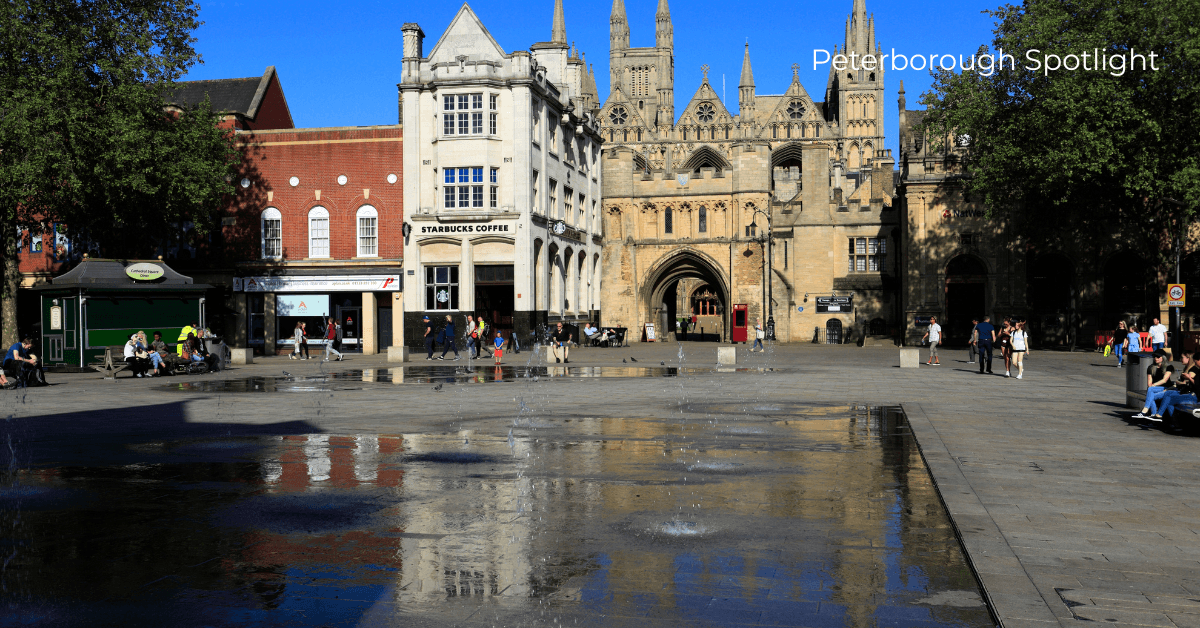 |
The Cathedral Square Fountains: Symbol, Folly Or Summer Comeback? |
Few things in Peterborough manage to annoy people quite like the Cathedral Square fountains.
For some, they are a harmless bit of city-centre life.
For others, they are the perfect symbol of how Peterborough does things: expensive idea, patchy delivery, endless arguments, then years of people asking,
“Are they working or not?”
The fountains have been controversial for years. In July 2024, ITV reported that the council had decided they would remain switched off, with repair costs described as running into thousands of pounds.
And yet people still talk about them.
That tells you something.
This is not really about water squirting out of paving.
It is about trust.
If a city centre feature is installed, breaks, costs money, becomes a running joke, and then sits there as a reminder of promises not quite landing, people start applying that same suspicion to everything else.
New city-centre vision?
Fine, but will it work?
New public realm idea?
Fine, but will it be maintained?
New family-friendly space?
Fine, but will it still look good in three years?
The fountains matter because they are visible.
You do not need a council report to understand them.
You can stand in Cathedral Square and see the argument under your feet.
That is why this summer is interesting.
If they stay off, some will say: good, stop wasting money.
If they come back, others will ask: how much, who pays, and will they actually keep working?
If the area still feels half-finished, people will say the fountains are just another Peterborough metaphor with drainage.
The sharper question is:
Should Peterborough spend money making visible public spaces better, or should every spare pound go into basics first?
Because both arguments have weight.
A city centre needs life, families, reasons to linger, and things that make it feel less tired.
But residents are also staring at bills, roads, services, housing pressure and council spending, wondering whether water features should be anywhere near the top of the list.
So let’s ask it properly.
Should the Cathedral Square fountains return if they can be made reliable yes, no, only if privately funded, or only after more urgent basics are fixed? |
 |
Why Chinese Cars Might Be The Future Of Peterborough Streets |
You can already feel the car market changing.
Not in a dramatic “everyone is driving electric tomorrow” way. More like this:
Someone at school pick-up asks about a brand you had barely heard of two years ago.
A neighbour starts looking at a BYD, MG, GWM Ora, Omoda or another Chinese-backed model because the monthly payment looks tempting.
A taxi driver mentions range.
A family compares a nearly-new electric car against another petrol SUV and suddenly the Chinese option does not look like a joke.
Peterborough is exactly the kind of place where this could matter.
People here drive.
School runs, shift work, A47 trips, A1 journeys, village routes, Serpentine Green, Brotherhood, Fengate, Werrington, Hampton, Whittlesey, Stamford, Cambridge, hospital runs, airport runs.
Cars are not lifestyle accessories for many households.
They are logistics.
So if newer Chinese-brand cars offer more kit, longer warranties, lower running costs or cheaper monthly payments, people will look.
Not because they care about global car buying strategy.
Because they care about the household spreadsheet.
But there are proper questions too.
Where do you service it?
How quickly can parts be sourced?
What happens to resale value?
Is the insurance reasonable?
Does the real-world range match the sales pitch?
Will local garages be able to handle them?
Are public chargers good enough for how people actually drive here?
Would you buy one used?
Would you trust one for school runs and motorway trips?
This is where Peterborough drivers need practical advice, not badge snobbery.
Ten years ago, plenty of people mocked brands they now happily drive.
The next version of that may already be happening.
The better question is not:
“Would you buy a Chinese car?”
It is:
At what price, warranty and monthly saving would you stop caring about the badge?
Because if the saving is £20 a month, many people will stick with what they know.
If it is £100 a month, with a long warranty and decent reviews, the conversation changes fast.
So this applies even more if you currently thinking of changing or upgrading your car would you buy a Chinese-brand car if the monthly cost, warranty and running costs made sense or will you still stick with a familiar badge? |
 |
Why Every Household Should Probably Have More Than One Bank Account |
One bank account for everything sounds simple.
Wages in. Bills out. Card spending. Food shop. Petrol. Subscriptions. Takeaway. School payments. Amazon.
Chaos in spreadsheet form.
The problem is that one-account living makes it too easy to lie to yourself.
You check the balance and think there is money left.
But the council tax has not gone. The insurance renewal is lurking. The car needs fuel. The school trip payment is due. The dog food order is coming.
And then, suddenly, the balance was not really the balance. It was a trap wearing numbers.
A lot of households would be better off with separate pots or accounts. Not because it is fancy.
Because it stops money pretending to be available when it has already been spoken for.
A simple version:
Bills account
Food and fuel account
Annual costs account
Spending account
Emergency account
This is not about being rich.
It is more useful when money is tight.
Because when everything comes from one pot, the loudest spending wins.
The takeaway wins. The quick shop wins. The “I’ll sort it later” subscription wins.
The annual car insurance bill then arrives like a debt collector in a hi-vis jacket.
The trick is to make the important money harder to accidentally spend.
Even £25 a month into an annual-cost pot is £300 a year you do not have to find in one horrible week.
£50 a month is £600.
£100 a month is £1,200.
That can be the difference between “annoying” and “panic”.
How many accounts or pots do you use one for everything, bills plus spending, or full spreadsheet goblin mode?
IMPORTANT NOTE: Many banking apps allow you to set up these pots for your accounts if yours doesn't look a setting up one up with a different bank it will make monthly money management so much easier and allow you plan for events rather than react with blind panic! |
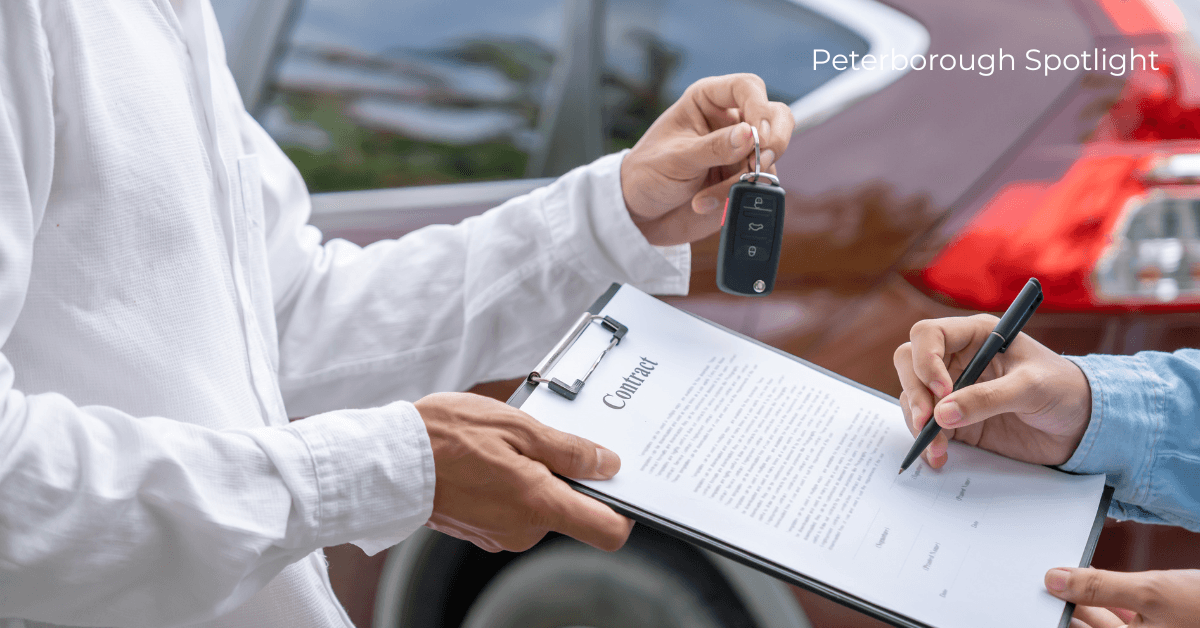 |
Should You Sell Your Car To A Car-Buying Site? |
At some point, every car owner is tempted by the easy button.
Type in the reg. Get a price. Book a slot. Sell the car.
No tyre-kickers. No “is this still available?” messages.
No stranger arriving late and offering £900 less because they “came from far”.
Peterborough drivers have plenty of routes: online car-buying services, local dealerships, part-exchange, auctions, private sale, specialist buyers, and the classic “my mate knows someone”.
The question is not whether car-buying sites are good or bad.
The question is:
What are you paying for convenience?
Because convenience has a price.
A quick sale may be worth it if you need the money, hate private selling, have a car with issues, or do not want strangers on your driveway.
But if the online quote drops after inspection, or if admin fees, condition deductions and timing make the final number lower than expected, that “easy” sale can start to feel less easy.
Before selling, compare at least three routes:#
Online buying service. Dealer part-exchange. Private sale estimate.
Then ask:
How fast do I need the money? Can I cope with private buyers? Is the car clean, serviced and photographed properly? Are there dents, tyres, warning lights or missing history that will knock the price down? Would a local dealer offer more because they need stock? Would a private buyer pay more because the car suits a family, commuter or first-time driver?
Peterborough care owners it matters here because cars are practical money.
A family in Hampton, Werrington, Orton, Fletton or the villages may need something reliable more than something flashy. A tidy used car with history can still be very attractive.
The easy button may be right.
But press it with your eyes open.
Have you ever sold to an online car-buying service, dealership, part-exchange or private buyer and did you feel you got a fair deal? |
 |
The Peterborough Money Question: What Are People Actually Investing In? |
Not everyone is investing in shares, crypto or pensions.
Some people are investing in solar panels.
Some are overpaying the mortgage.
Some are putting money into a side business.
Some are buying tools, training, stock, a van, a website, or equipment.
Some are doing up the house.
Some are buying gold.
Some are hoarding cash because everything feels too uncertain.
Some are spending on private healthcare, tutoring, dental work or physio because waiting is costing them in other ways.
Some are putting money into children’s activities because they see it as confidence, not just cost.
And some are not investing at all.
They are surviving.
That is the more honest Peterborough money conversation.
Investment does not always look like a trading app.
Sometimes it looks like:
A boiler that cuts bills.
A course that increases income.
A car that does not keep breaking.
A house repair before it gets worse.
A pension contribution nobody sees now.
A child getting help before school becomes a fight.
A business owner paying for better systems instead of another panic month.
The interesting question is not “what should everyone invest in?”
That depends on income, debt, age, risk, goals, family and whether the roof is currently behaving.
The sharper question is:
Where does your next spare £500 actually do the most good?
Debt?
Emergency fund?
House repair?
Car?
Health?
Training?
Pension?
Business?
Childcare?
Energy saving?
That is where a proper money adviser or accountant can be useful not telling everyone the same answer, but helping people choose the order.
Because putting money into the wrong thing at the wrong time can feel responsible and still be daft.
If you had a spare £500 this month, would you save it, pay debt, fix the house, invest it, spend it on family, or use it to make life easier? |
 |
The New Openings Test: Will They Change Peterborough Or Just Fill Units? |
New businesses opening is good news.
Usually.
But Peterborough has learned to be cautious.
A new sign goes up.
People get excited.
Then the real questions arrive.
Will it bring people into the city centre? Will locals actually use it? Will it create jobs worth having? Will it help nearby cafés and shops? Will it still be there in two years?
Will it make Queensgate, Cathedral Square, Bridge Street, Fletton Quays or the wider centre feel more alive?
Queensgate announced that Frasers, Flannels and Sports Direct were set to open in the centre, bringing big retail names into the city.
That matters, because large stores can change footfall patterns, pull people back into town, and make a centre feel less hollow.
But big names are not magic.
Peterborough does not just need units filled.
It needs reasons to visit.
A shop opening is more useful if people also eat locally, park easily, visit nearby independents, stay longer, and feel the centre is worth the trip.
Otherwise, it becomes another single-purpose visit.
In, buy, leave.
That helps, but it does not transform anything.
The same applies to Fletton Quays, Cathedral Square, Queensgate and every “new opening” story.
The question should always be:
Does this give people another reason to spend time here, or just somewhere else to spend money quickly?
A strong city centre needs layers.
Retail.
Food.
Coffee.
Events.
Independent shops.
Safe public spaces.
Easy parking.Toilets.
Evening reasons to stay.
Family-friendly stops.
Things teenagers can do that are not just wandering.
Places older residents feel comfortable.
New openings help if they plug into that wider experience. They do not help if they become another isolated announcement.
What new business would actually make you visit Peterborough city centre more often food, fashion, family activity, entertainment, independent shops, practical services, or something else? |
 |
That’s This Week In The Can |
This week we got underneath the surface because Peterborough needs that.
Not more polite nodding. Not more “interesting to see”. Not more pretending every announcement means something.
The council election result matters because it shows voters are restless.
The fountains matter because visible failures become symbols.
House prices matter because “average” tells you almost nothing.
Inflation matters because your mortgage can shrink in theory while your food bill punches you in real life.
Bank accounts matter because one pot makes it too easy to spend money that was already spoken for.
Chinese cars matter because badges matter less when monthly payments bite.
Car-buying sites matter because convenience can be expensive.
New openings matter because filling units is not the same as building a city people want to use.
That is the version of Spotlight we want more of.
Specific. Unfiltered. Useful.
A bit annoying if you prefer soft language.
Next week, we want to go even harder on the questions people actually talk about:
Which Peterborough businesses are worth trusting?
Which public promises deserve more scrutiny?
Where are families being squeezed?
Where is money being wasted?
What looks good on paper but fails in real life?
And who locally can explain the stuff people are about to spend money on?
Send us tips, names, prices, examples, photos, questions, and the local subjects everyone talks about but nobody has a local voice.
Because Peterborough does not need another polite newsletter. It needs one people forward with:
“Have you seen this?” |
|