
Subsidence: The House Problem That Should Make Home Buyers Pause On The Purchase Immediately! |
Subsidence means the ground beneath a building is sinking. Cracks need investigation before anyone can say what is causing them. |
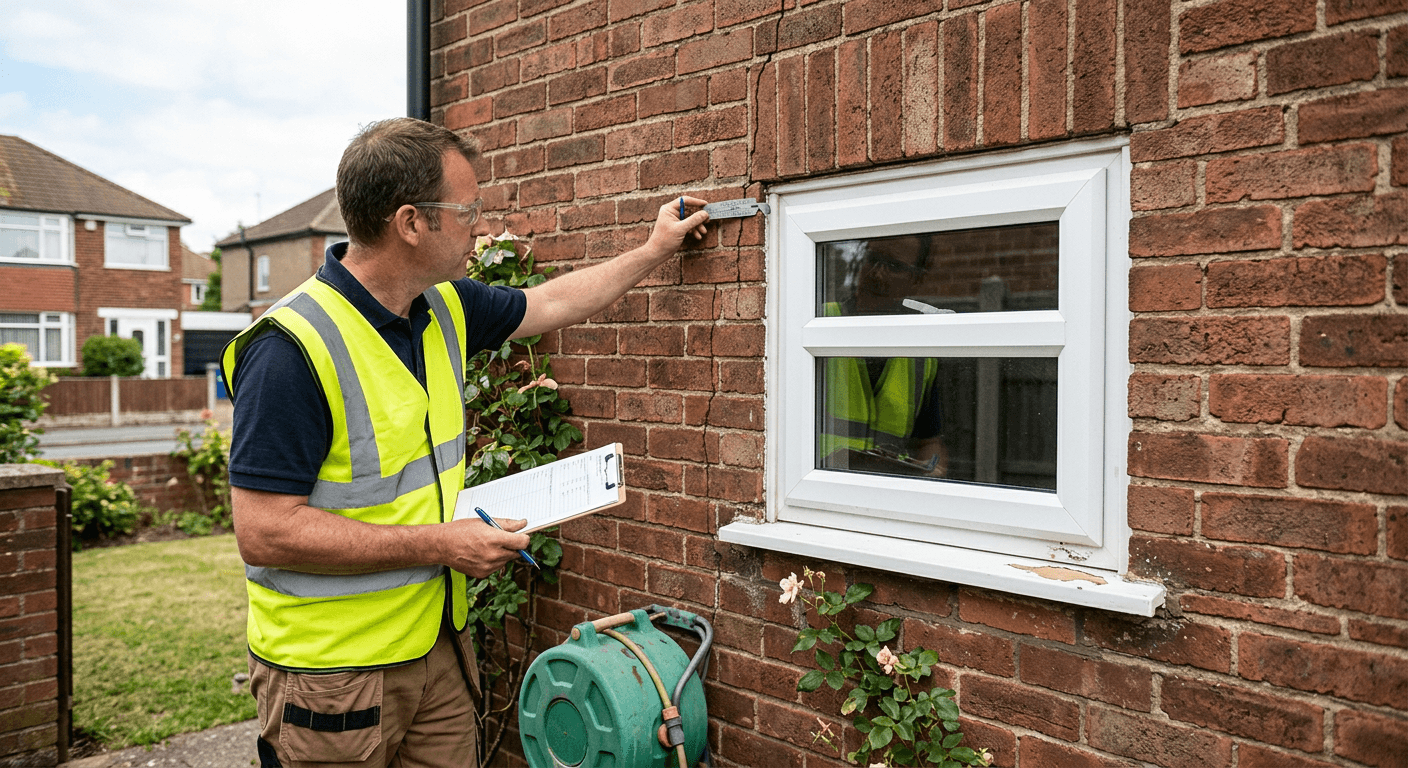
The house has the kitchen you wanted, the garden gets decent light and you have already started deciding where the sofa will go.
Then you spot a crack near a window.
Do you carry on viewing, or start asking harder questions?
For a buyer, suspected structural movement, where parts of the building shift, or active subsidence, where the ground beneath it is sinking is the defect that deserves the biggest pause.
Not every crack means subsidence.
Older homes move, plaster cracks and small imperfections are common.
But signs that the building itself may be shifting can affect repairs, insurance, mortgages and the price you are really paying for the property.
The warning signs can include new or widening cracks, doors and windows that stick, wallpaper tearing, or floors that appear to slope.
One sign on its own proves very little.
A small crack in plaster may be cosmetic.
A pattern of movement appearing in several parts of the house needs a closer look.
The point is not to become a crack detective with your phone torch.
It is to avoid making a huge financial decision based on a quick reassurance from the seller or a fresh coat of paint.
What should a buyer do next?
Start with the survey. Royal Institution of Chartered Surveyors (RICS) home surveys are physical inspections of a property's condition and potential risks.
The right level of survey depends on the building and its condition, but a home showing possible movement may need more detailed investigation than a basic once-over.
If the survey raises concerns, get advice from an independent structural engineer, a specialist in how buildings carry weight and stay stable, or another suitably qualified specialist.
You need to know what is causing the movement, not simply receive a professional description of the crack.
Ask for clear answers to six questions:
- Is the movement old and settled, or still continuing? - What has caused it? - What repairs are needed? - What could those repairs cost? - Can buildings insurance, which covers the building rather than its contents, be arranged on normal terms? - Could the issue affect a future sale or mortgage?
Until those answers are on paper, it is hard to know if the asking price is a bargain, a fair reflection of the risk or a very expensive invitation to learn about building work.
The HomeOwners Alliance identifies suspected subsidence as a reason to investigate after a survey.
Its advice is to seek structural advice, establish likely repair costs, check insurance and then decide if you should renegotiate or walk away.
That last part is easy to miss. A worrying report does not automatically mean the purchase is finished.
A historic problem with a known cause, completed repairs and available insurance is a different proposition from movement that is continuing and has no settled repair plan.
The defect is serious. The decision still needs judging on the facts.
Why Peterborough buyers need an extra check
There is a local layer here that should not be skipped. Peterborough City Council provides information on flood and water issues including river flooding, rainwater collecting on the ground, water rising from beneath the ground, and drainage risks.
Its material also covers area-wide flood assessments and places with serious drainage concerns.
That does not mean every Peterborough property has a subsidence problem.
It does mean damp, drainage trouble or signs of movement deserve more than a cosmetic explanation.
Water getting where it should not can become part of the wider investigation, particularly if the property sits in an area with known flood or drainage risks.
The government's long-term flood-risk service lets buyers check area-level risks from rivers, the sea, rainwater collecting on the ground, reservoirs and water below the surface.
It is a sensible first check for any address under serious consideration.
But it cannot inspect an individual house, its drains, foundations or previous repairs.
A map can point you towards better questions; it cannot answer them for you.
For a Peterborough buyer, that means checking the address through the council's local flood and water information as well as arranging the property survey.
Look at the paperwork too.
Ask for evidence of previous repairs, guarantees and insurance claims.
If movement is suspected, obtain written repair estimates before exchanging contracts, when the purchase becomes legally binding.
And do not wait until you are emotionally committed.
The longer you spend imagining Christmas in the dining room, the easier it becomes to explain away a problem that deserves proper attention.
So, which defect should make a buyer slow down before falling in love with the house?
Suspected structural movement is the clearest answer.
A crack alone is not proof of subsidence, but a combination of movement signs is a reason to pause, bring in the right specialist and work out the real cost before signing up.
If a survey has raised concerns about cracks, sloping floors, damp or drainage, tell us what the report said and how the seller responded.
Specific examples could help shape a follow-up for other buyers facing the same decision. |




0 Comments
Join the conversation
Be the first to comment
Share your thoughts above.